
When Does Paving Season End? A State by State Guide
Quick Answer
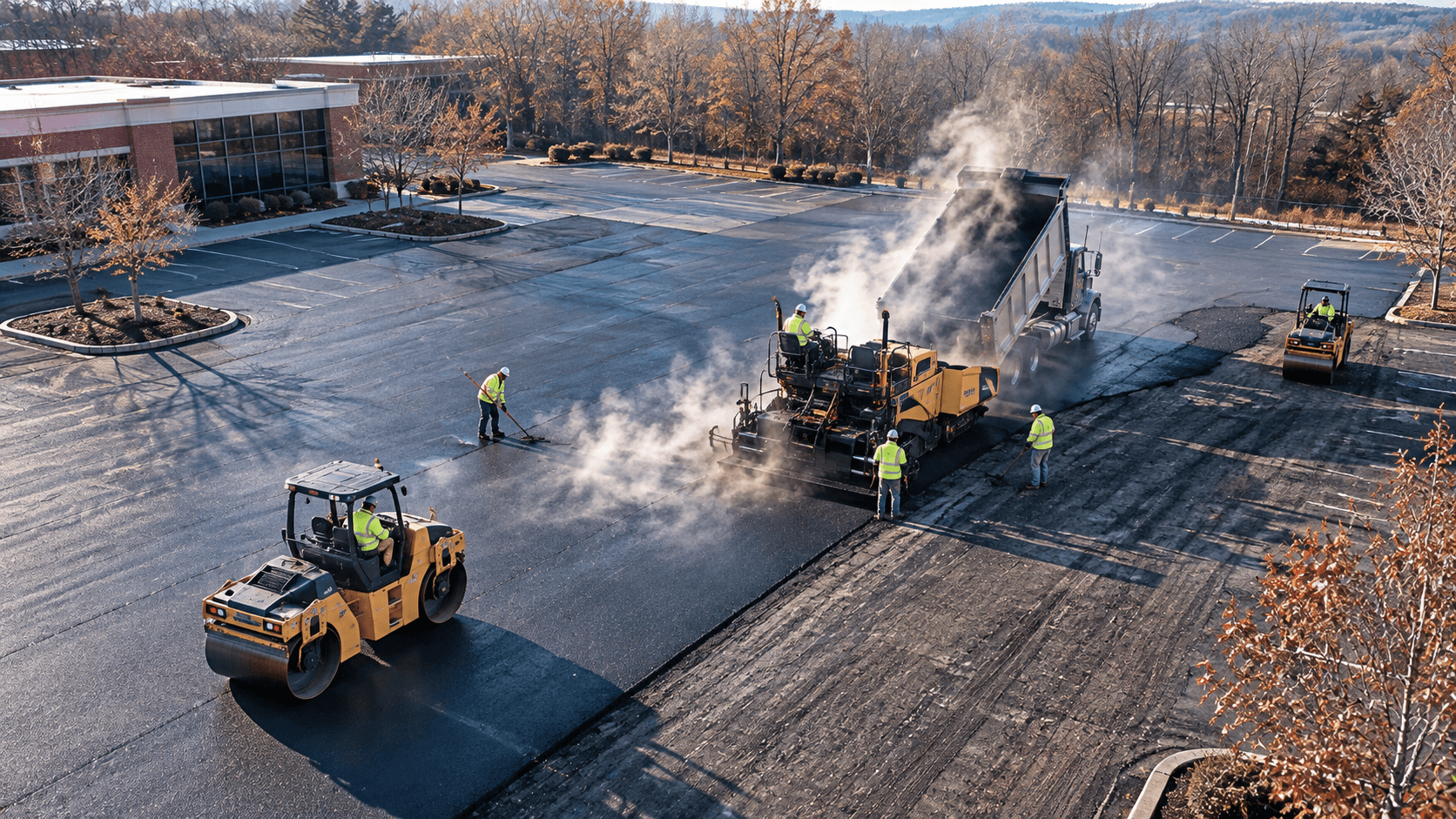
Paving season does not end on a date. It ends when air and ground temperatures stop supporting proper compaction. Ohio's DOT specification, one published example, sets a 40°F minimum air temperature for standard surface courses, with higher minimum surface temperatures for thin lifts. In the colder states that point arrives in the fall. Across the Southeast, Gulf Coast, and desert Southwest, there effectively is no hard cutoff.
Why the Calendar Is the Wrong Way to Think About This
Hot mix asphalt has to be compacted while it is still hot enough to be workable. Every lift starts cooling the moment it leaves the paver, and once it drops below a certain temperature, the roller can no longer press the aggregate together tightly enough. A mat that cools before it is fully compacted ends up with more air voids than it should have, and those voids are where water gets in, freezes, and starts the cracking process early. That is true in July and it is true in November. The only thing that changes by season is how fast the clock runs out.
The Ohio Department of Transportation's own paving specification is the clearest example I know of how specific this gets. Its minimum surface temperature for placing asphalt scales with lift thickness: 36°F for lifts 3.0 inches and over, 40°F for 1.5 to 2.9 inches, 50°F for 1.0 to 1.4 inches, and 60°F for anything under an inch, with a 40°F minimum air temperature on standard surface courses. It also sets a calendar rule on top of that: surface courses using polymer modified binder cannot be scheduled after November 1, regardless of what the thermometer says that day, unless the project engineer signs off on an exception. One state, one spec, and the cutoff still depends on both the temperature and the exact course being placed.
Cold ground makes it worse before the truck even arrives. A sub base sitting at a low temperature pulls heat out of fresh asphalt far faster than one at a moderate temperature, which is why two crews working the same mix on the same day can get very different results depending on what the ground underneath them is doing.
So Why Does the Cutoff Shift by Climate?
We pave in 45 plus states, so my honest answer to "when does the season end" always starts with a question back to you: where is the property?
Cold and Freeze Thaw Regions
Across the Northeast, Upper Midwest, and Great Lakes states, daytime air temperatures that consistently sit in the 30s and 40s make new paving hard to justify. Most commercial paving in these regions wraps up in the fall, with milling, base repair, and seal coating following a similarly earlier calendar.
Mixed Climate Regions
The Mid Atlantic, Ohio Valley, and Southern Plains sit in between. A mild stretch in late fall is often still workable, while an early cold front can close the window weeks ahead of a typical year. This is the hardest region to plan a fixed cutoff for, which is why I trust a site specific temperature check over a date on a calendar.
Hot Humid and Hot Arid Regions
The Southeast, Gulf Coast, and desert Southwest rarely see a true paving shutdown. Heat becomes the bigger scheduling factor in mid summer, not cold in winter, so the paving calendar in these states essentially runs year round with adjustments for summer heat.
Pacific Wet Regions
Along the Pacific Northwest coast, rain, not cold, is the dominant constraint. A dry window matters more than a temperature reading, since asphalt cannot be laid or compacted properly over standing water or a saturated base.
What Happens If a Lot Gets Paved Too Late Anyway
- Reduced compaction density, leaving more air voids than the mix was designed for
- Faster water infiltration once the first freeze thaw cycle hits
- Visible raveling and loss of surface aggregate within the first one to two seasons
- A shortened overall service life on a surface that would otherwise have lasted two to three decades
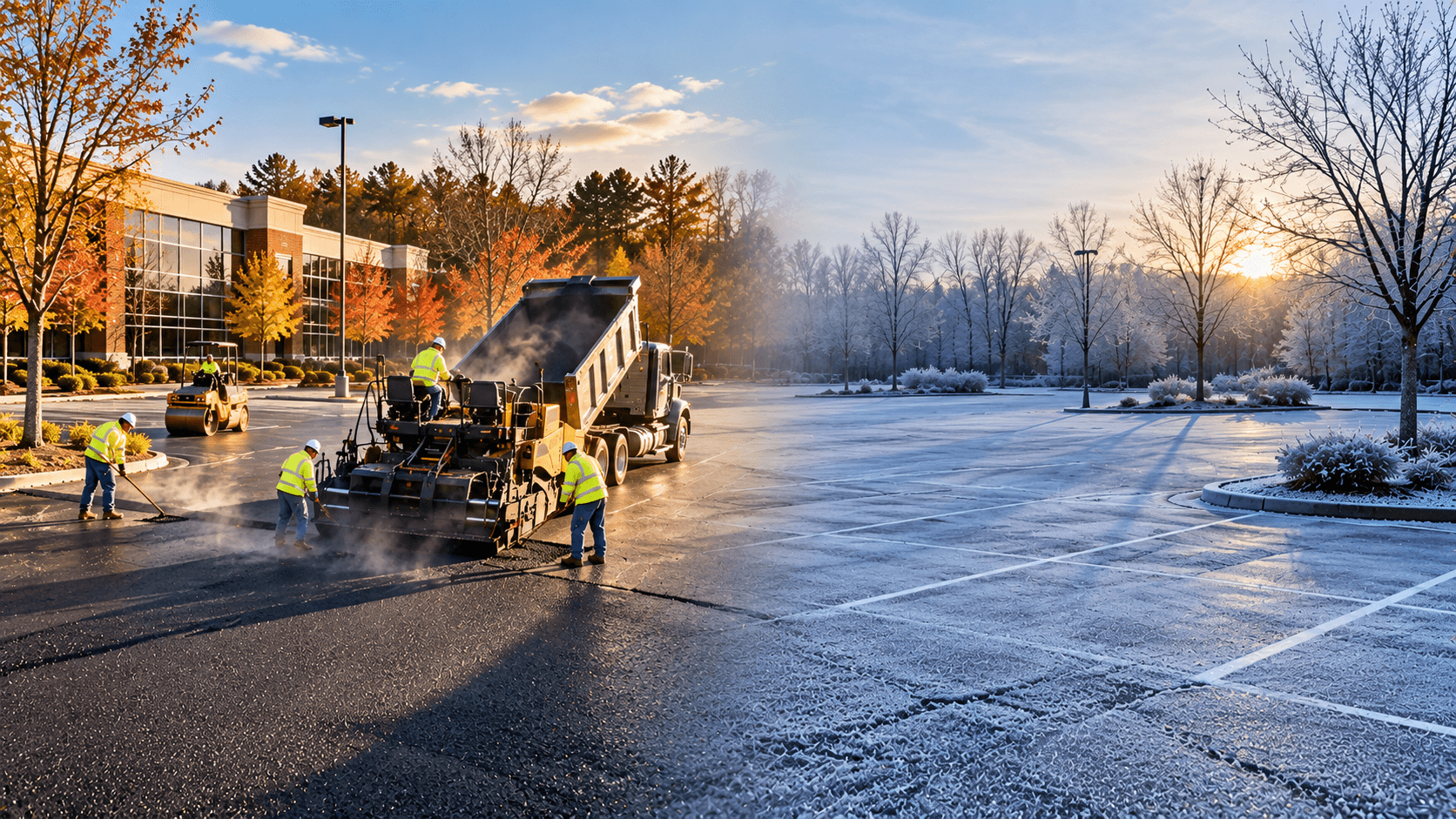
None of this means a late season paving job is always a mistake. It means the decision has to be made on actual site temperature, not on whether there is still time left before year end.
Does Seal Coating or Striping Follow the Same Cutoff?
No, and this trips up a lot of owners planning fall projects. Seal coating needs its own temperature window (see: Is It Too Late to Seal Coat This Year? How to Tell). Striping has a separate set of material specific cure requirements. A property that misses the paving cutoff can often still get striping or a seal coat later in the fall, and if you are planning several services at once, sequence paving first, since it is the most temperature sensitive of the group.
Planning a Project Before the Window Closes
My advice to any property manager watching the calendar: get the site assessed early. How Much Does Commercial Asphalt Paving Cost in 2026? walks through the cost side of that planning. When we visit, we confirm current base condition and give you a realistic answer on whether this season or next spring is the better call for your property, rather than guessing based on the month.
FAQs
What temperature is too cold to pave asphalt?
It varies by lift thickness and course type. Ohio's DOT specification, as one published example, requires 36°F to 60°F minimum surface temperature depending on lift thickness, with a 40°F minimum air temperature for standard surface courses. Thinner lifts cool faster and need a higher starting temperature than thick base courses.
Can asphalt be paved in winter at all?
In cold and freeze thaw regions, winter paving is possible but uncommon and requires specific adjustments. Can You Pave Asphalt in Cold Weather? What's Actually Possible covers exactly what that takes.
Does the paving season end on the same date everywhere FineLines works?
No. We operate across 45 plus states, and the season closes at very different points depending on regional climate, from an earlier cutoff in parts of the Northeast to effectively no cutoff across much of the Southeast and Southwest.
What should a property owner do if they miss the paving window this year?
Interim repairs, such as pothole patching or crack sealing, can hold a lot over until the next paving window opens. A full assessment now also puts the property first in line when the season reopens, rather than starting the process from scratch in spring.
Is seal coating a good alternative if paving season has already closed?
Seal coating has a separate, generally longer window in most climates, but it is a maintenance step for existing asphalt, not a substitute for paving or resurfacing work that a failing base actually needs.
Free Site Assessment