
What Is Asphalt Milling? (And Why It Comes Before Every Repave)
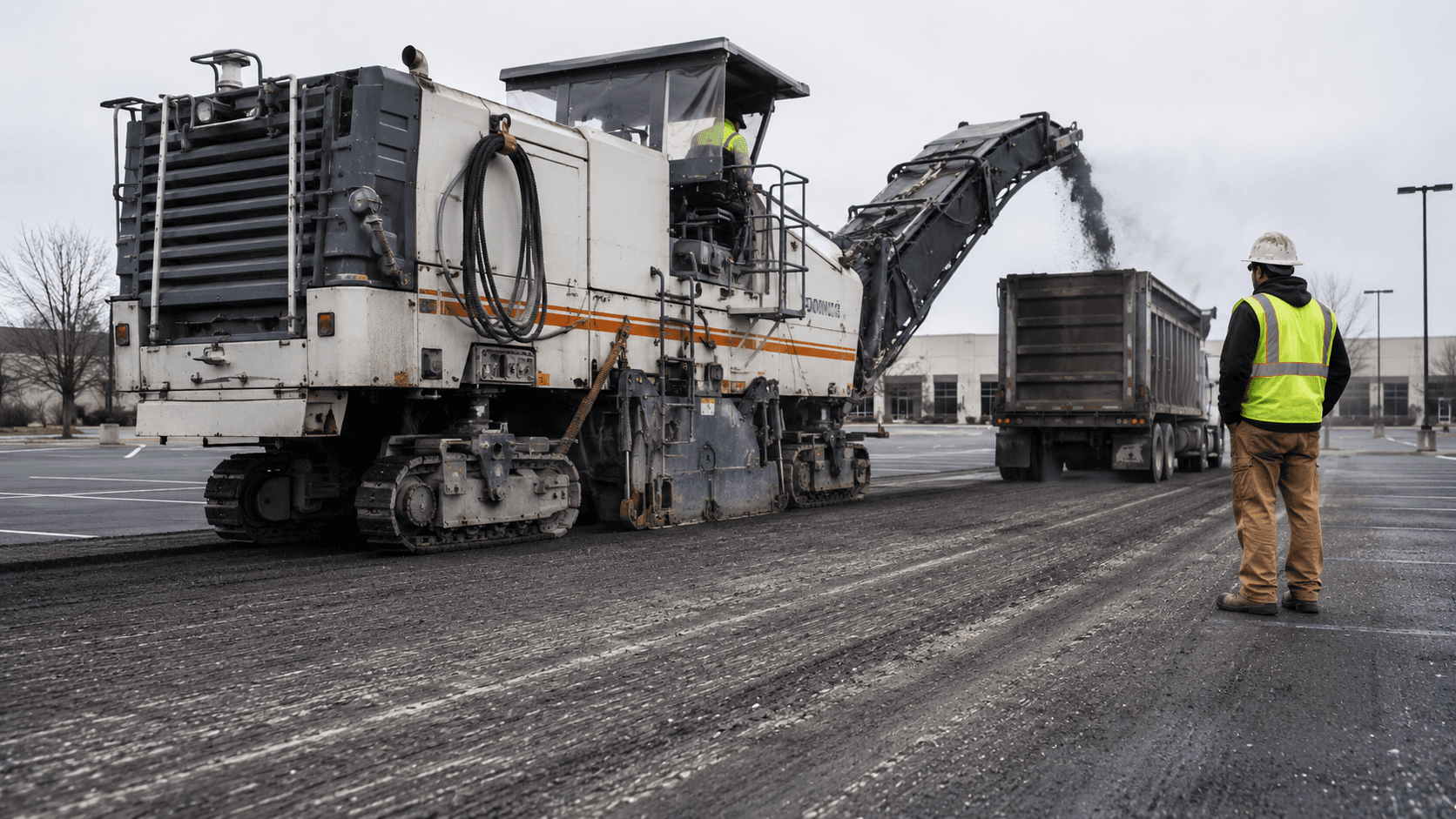
Milling is the step most property owners have never heard of right up until we explain why their overlay needs it first.
It's not an upsell. It's the difference between an overlay that bonds properly and one that peels apart in a year. Let me walk you through what it actually is.
I'm Gabriel, founder of FineLines. We mill and repave commercial lots across 45+ states, so here's the plain-English version of what milling does and why it matters.
What Milling Actually Is
Asphalt milling also called cold planing is the controlled grinding away of the top layer of an existing asphalt surface, using a machine with a rotating drum covered in carbide teeth.
Picture a giant planer, the kind a woodworker runs across a rough board to make it flat and smooth again. A milling machine does the same thing to a parking lot, just at a much bigger scale.
The ground-up material is called RAP (reclaimed asphalt pavement). It doesn't go to waste RAP gets hauled off, recycled, and often mixed right back into new asphalt.
Why Milling Comes Before an Overlay
Here's the part that actually matters to your lot: new asphalt doesn't bond well to old, weathered asphalt sitting there as-is. Milling first solves three problems at once:
- Creates a clean bonding surface. A rough, milled texture lets the new layer grip properly instead of sitting loosely on top.
- Keeps your grade and drainage correct. Skip milling and repeated overlays slowly raise the lot's height eventually causing water to pool against curbs, doorways, and drains.
- Removes the worst of the surface damage. Cracking and raveling at the very top layer often go with it, giving the new overlay a cleaner start.
Skip milling and pave straight over an old, oxidized surface, and the new asphalt is far more likely to delaminate peel away in sheets within a season or two.

Milling vs. Full Removal
These get confused constantly. They're not the same job:
| Milling | Full Removal | |
|---|---|---|
| What it removes | Top 1–2 inches only | All asphalt, sometimes the base too |
| Base underneath | Left in place | Excavated and rebuilt |
| Used before | An overlay | A full replacement |
| Cost | Lower | Higher |
If the base is solid, milling is all that's needed. If the base has failed, milling alone won't fix the underlying problem that calls for full removal instead.
What Does Milling Cost?
For commercial lots, milling typically runs:
- $1 to $3 per square foot for standard 1–2 inch milling depth
- Higher for deeper milling, tight access, or lots with a lot of curbs, islands, and drainage structures to work around
On a mill-and-overlay job, milling is usually the smaller line item the new asphalt itself costs more. But skipping milling to save that cost is exactly the kind of shortcut that leads to a failed overlay and a repeat bill.
The RAP Question: What Happens to the Old Material
Reclaimed asphalt pavement doesn't just disappear. Depending on the job, it's hauled off for recycling, stockpiled on-site for later use, or processed and blended right back into new hot-mix asphalt. It's one of the most recycled materials in construction and it's part of why milling is a genuinely efficient step, not just an extra cost.
When we handle milling and removal ahead of an overlay, we assess the base first and mill to the depth your specific lot needs not a one-size-fits-all number.
FAQs
What is asphalt milling used for?
Milling removes the top 1 to 2 inches of an existing asphalt surface to prepare it for a new overlay. It creates a clean bonding surface, keeps the lot's grade and drainage correct, and removes surface-level damage before new asphalt goes down.
How much does asphalt milling cost?
Commercial milling typically runs $1 to $3 per square foot for standard depth, depending on access, drainage structures, and how much material needs to be removed. It's usually less expensive than the overlay asphalt that follows it.
Do I always need to mill before an overlay?
In most cases, yes, especially if the existing surface is rough, cracked, or oxidized. Skipping milling on a worn surface increases the risk that the new overlay won't bond properly and will delaminate early. We assess each lot to confirm.
What happens to the asphalt that gets milled off?
It's called RAP (reclaimed asphalt pavement) and it's recycled, either hauled off to be reprocessed, stockpiled for future use, or blended directly back into new hot-mix asphalt. Very little of it goes to waste.
Free Site Assessment