
Is It Too Late To Seal Coat This Year? How To Tell
Quick Answer
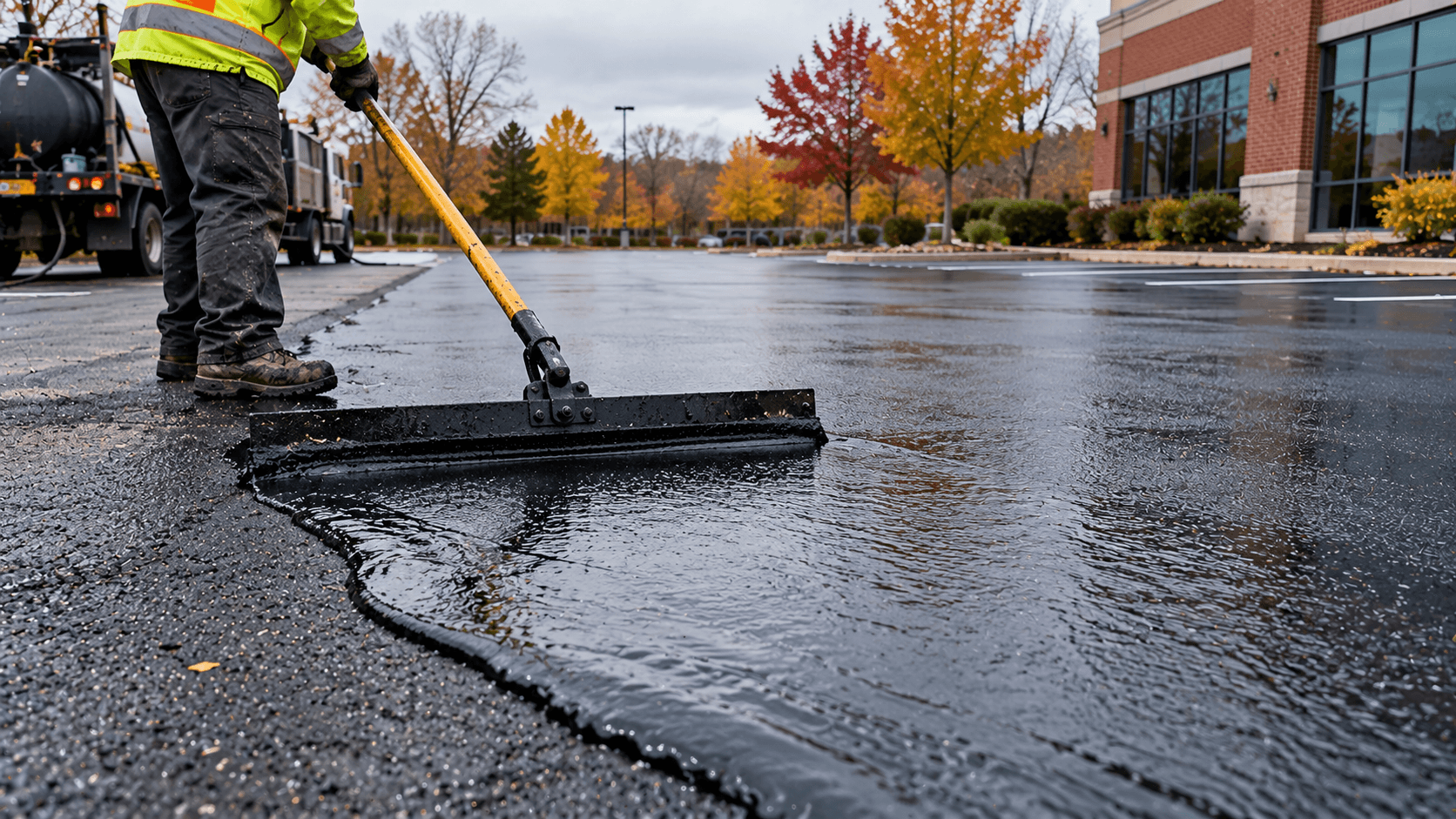
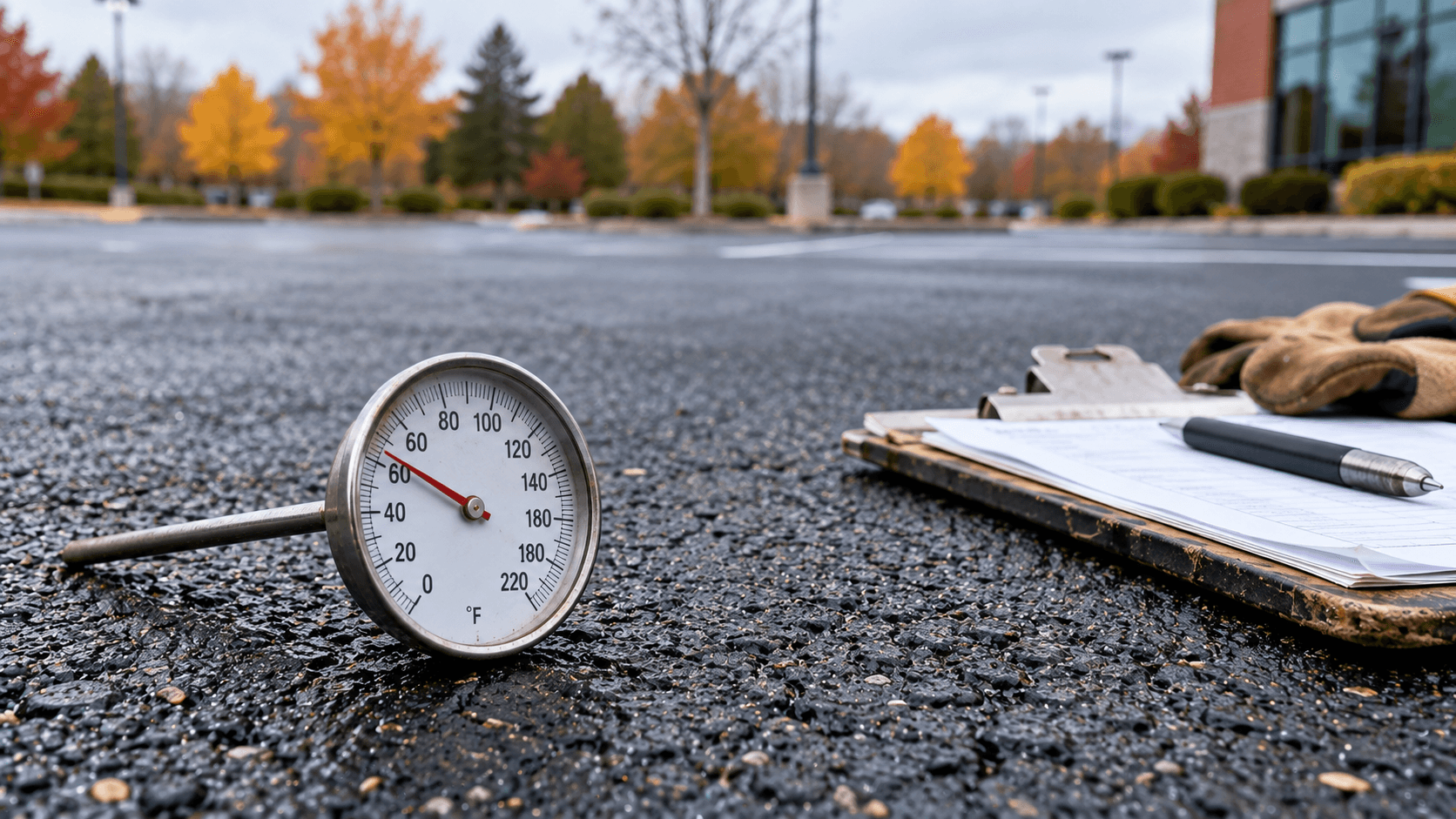
Seal coating needs the pavement surface at 50 degrees Fahrenheit or warmer and the air temperature at 50 degrees and rising, with no freezing temperatures expected for at least the next 24 hours. The guidelines published by the Colorado Asphalt Pavement Association also rule out application if rain is expected within eight hours of the job. If the forecast cannot clear both of those conditions at once, the window has effectively closed for the year.
Why Seal Coat Needs Heat to Actually Work
Seal coat is not paint. It is a water based or solvent based emulsion that has to cure through evaporation, and cold air slows that process dramatically. A coat applied in marginal temperatures can look finished within a few hours and still not be fully cured underneath. If the surface gets rained on or frozen before it cures, the material never bonds the way it should, and you are left with a seal coat that looks applied but is not protecting anything.
The Three Signs the Season Has Closed
Daytime Highs Are Not Reliably Clearing 50 Degrees
A single warm afternoon is not enough. The forecast needs to show several consecutive days in the right range, both for the application and the cure window that follows it.
Overnight Lows Are Dropping Toward Freezing
Even if daytime temperatures look workable, a hard overnight freeze during the cure window can crack a seal coat that has not finished setting.
The Extended Forecast Shows Rain Within Eight Hours of Application
Seal coat needs a dry window, not just a warm one. Best Time of Year to Seal Coat a Commercial Parking Lot covers the ideal conditions in more depth.
Does This Window Change by Region?
Yes. In cold and freeze thaw states, the seal coating season typically closes several weeks before the paving season does, since curing is more temperature sensitive than compaction. In hot humid and hot arid states, the practical limit is usually rain and humidity rather than cold, and the window can stay open much later, sometimes year round in the warmest markets.
What Happens If a Lot Gets Sealed Too Late Anyway
- The coating can crack, peel, or flake within the first winter
- A poorly cured coat traps moisture rather than blocking it, which can accelerate the oxidation it was meant to prevent
- The property often ends up needing a second application the following year, at full cost, because the first one never set properly
So What Should a Property Do Instead?
If the window has closed, my advice is almost always to wait for spring rather than force a late season application. Signs Your Commercial Parking Lot Needs Seal Coating helps you confirm whether the lot genuinely needs it this cycle, so the project is ready to schedule the moment conditions turn. If the lot has cracking that needs attention before winter, crack filling now is usually the better move, since it has a wider temperature tolerance than full seal coating. Hold the seal coat itself until the season reopens.
FAQs
What is the minimum temperature for seal coating?
Most manufacturers and commercial applicators set a minimum air and pavement surface temperature of around 50 degrees Fahrenheit, with temperatures expected to stay above that range through the curing period, generally 24 to 48 hours.
Can seal coating be done in late fall?
In mixed and warmer climates, yes, provided daytime highs are still reliably clearing the minimum threshold. In cold and freeze thaw regions, late fall is often already past the safe window.
What should be done if seal coating season has already closed?
Crack filling and routine maintenance can still be completed in cooler conditions than seal coating allows. The seal coat itself should wait until spring temperatures return.
Does coal tar sealer have a different temperature requirement than asphalt based sealer?
No, both material types follow similar minimum temperature and dry window requirements. Where coal tar sealer is used matters more for regulatory reasons: it is banned in Minnesota, Washington, Oregon, and Washington D.C., regardless of season.
How long does a seal coat need to cure before the lot can be reopened to traffic?
Published seal coating guidelines call for a minimum of eight hours of drying in good conditions before vehicle traffic resumes, extending to 24 hours or longer in marginal weather.
Free Site Assessment