
Signs You Need a Full Parking Lot Replacement (Not Just Resurfacing)
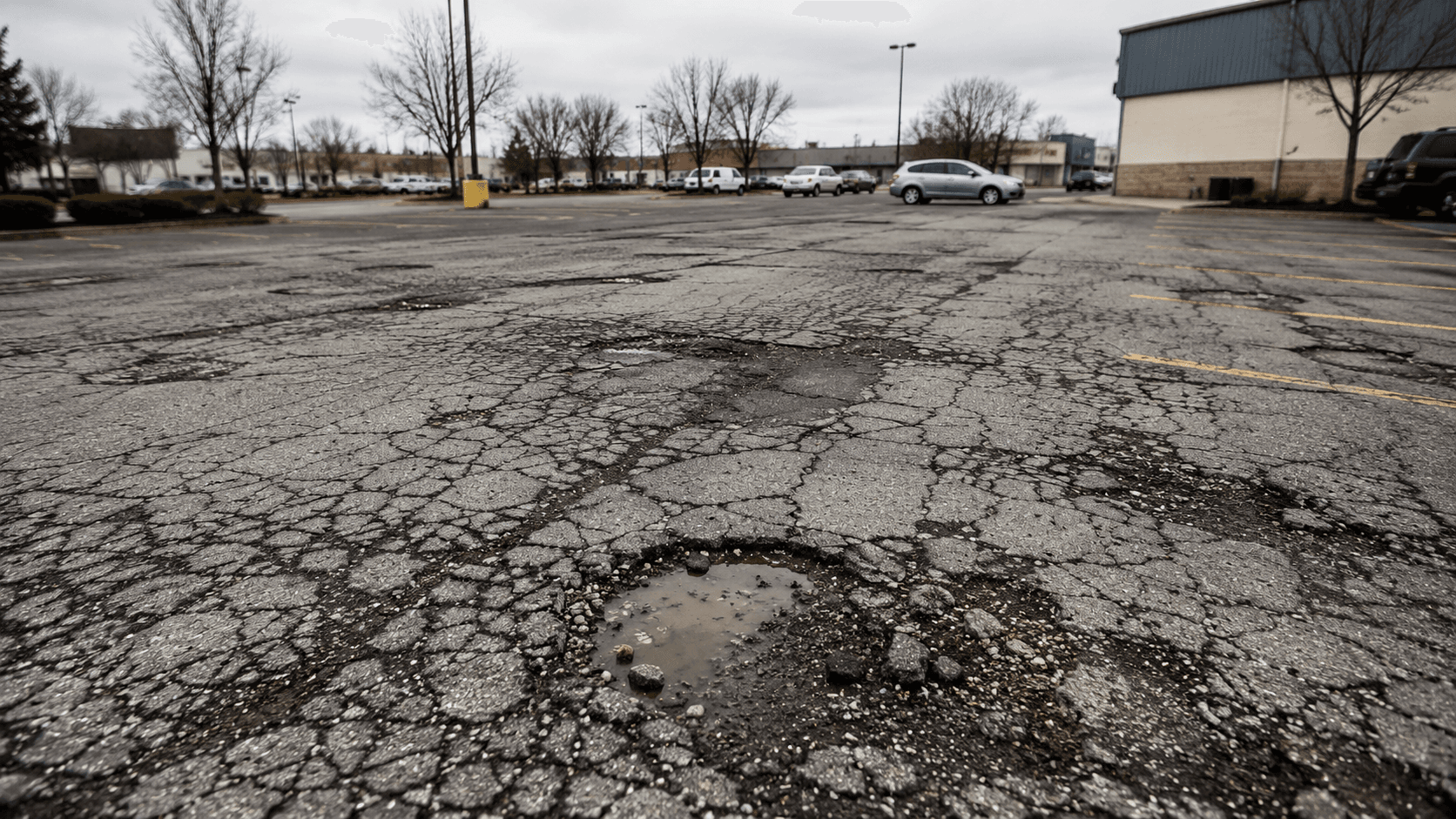
There's a specific conversation I have with property owners more than any other, and it's not about cost. It's about the moment a lot has crossed from “needs work” into “needs to be rebuilt.”
Resurfacing is a great tool. It's also the wrong tool once the base underneath has actually failed , and using it anyway just means paying for the resurfacing and the replacement, in that order.
I'm Gabriel, founder of FineLines. Here are the specific, structural signs I look for that tell me a lot is past resurfacing , not the surface wear signs, the deeper ones.
This Is Different From “Does My Lot Need Resurfacing”
Surface wear , fading, minor cracking, a rough ride , usually means an overlay will do the job well and affordably. This isn't about that. This is about the signs that mean the base itself, the compacted structure underneath your asphalt, has failed. Once that's true, a new surface layer over it is just a nicer-looking version of the same problem.
The Structural Signs That Mean Replacement, Not Resurfacing
- Alligator cracking covering more than 25% of the lot. Isolated alligator cracking in one section can sometimes be cut out and repaired. When it's spread across a quarter or more of the total surface, it means the base has failed broadly, not in one spot.
- Potholes that keep reopening in the same places after repair. If you've patched the same three or four spots more than twice, the base underneath those spots isn't holding, and another patch is a temporary fix on a permanent problem.
- Visible sinking or settling areas. Sections of the lot that have noticeably dropped mean the base has shifted or eroded. An overlay just follows that dip and creates a new low spot that collects water.
- Standing water that overlay work has already failed to fix. If a previous levelling attempt didn't resolve a drainage issue, the cause is likely base settlement, not a surface-level fix.
- The lot has already been overlaid once and is failing again. An overlay buys 10–15 years on a sound base. If a lot that's already had an overlay is showing the same failures again, there usually isn't a sound base left to build on a second time.
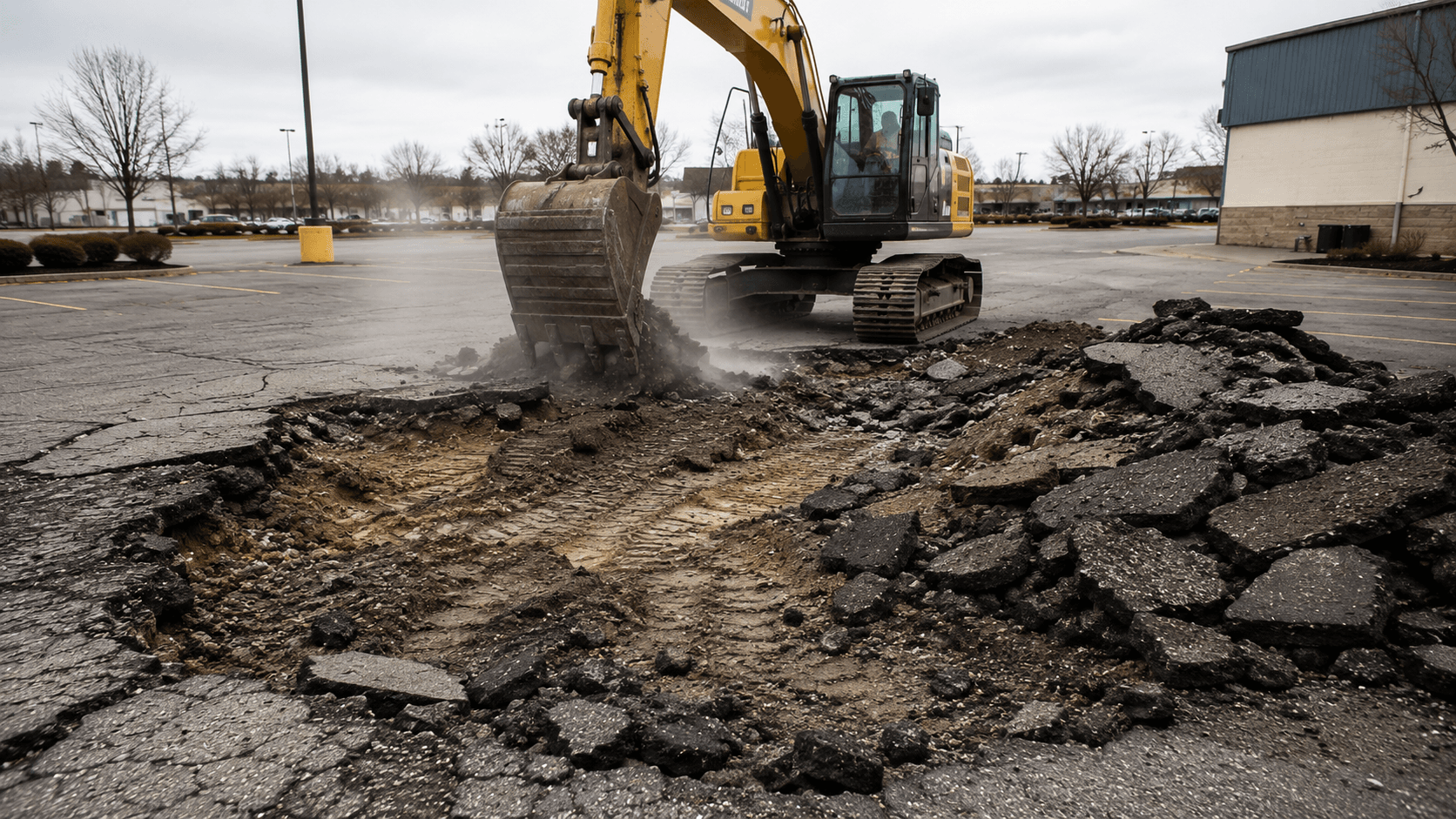
Why Resurfacing Over These Signs Doesn't Work
Two things happen when an overlay goes down over a failed base:
- Reflective cracking. The cracks in the old surface work their way up through the new layer, usually within a year or two, because the movement underneath hasn't stopped.
- The new surface fails alongside the old base. An overlay adds a fresh top layer. It doesn't add structural strength to a base that's already compromised.
The end result is the same lot, still failing, plus the cost of the overlay that didn't fix it , followed by the replacement that was needed from the start.
Quick Self-Check
| What You're Seeing | Likely Verdict |
|---|---|
| Minor surface cracks, faded color | Overlay likely fine |
| Alligator cracking under 25% of lot | Targeted repair + overlay |
| Alligator cracking over 25% of lot | Full replacement |
| 1–2 recurring potholes | Full-depth repair of those areas |
| Multiple recurring potholes, sinking areas | Full replacement |
| Already overlaid once, failing again | Full replacement |
Getting an Honest Read on Your Lot
The only reliable way to know which side of this line your property is on is a real assessment of the base, not just a look at the surface. When we evaluate a lot for overlays and resurfacing versus full replacement, we tell you plainly which one it actually needs , even when that's the more expensive answer.
FAQs
How much alligator cracking means I need full replacement, not resurfacing?
As a general guide, once alligator cracking covers more than about 25% of the total lot surface, the base has likely failed broadly enough that full replacement is more cost-effective than continued patching or an overlay.
Can a pothole that keeps coming back be fixed without full replacement?
Often, yes, if it's isolated to one or two spots. A full-depth repair that rebuilds the base in just that area can resolve a recurring pothole without replacing the entire lot. It's when multiple areas keep failing that full replacement becomes the more sensible option.
Is it ever worth overlaying a lot that's already been overlaid once?
Rarely. An overlay adds meaningful life to a sound base. If a previously overlaid lot is showing the same structural failures again, the base usually doesn't have enough integrity left to support another overlay, and replacement is the more reliable investment.
How do I know if standing water means drainage repair or full replacement?
If a levelling overlay or grading correction has already been tried and the water still pools, that typically points to base settlement rather than a simple surface issue, which is a signal toward full replacement in that area.
Free Site Assessment