
Seal Coating vs Crack Filling: What Does Your Parking Lot Need
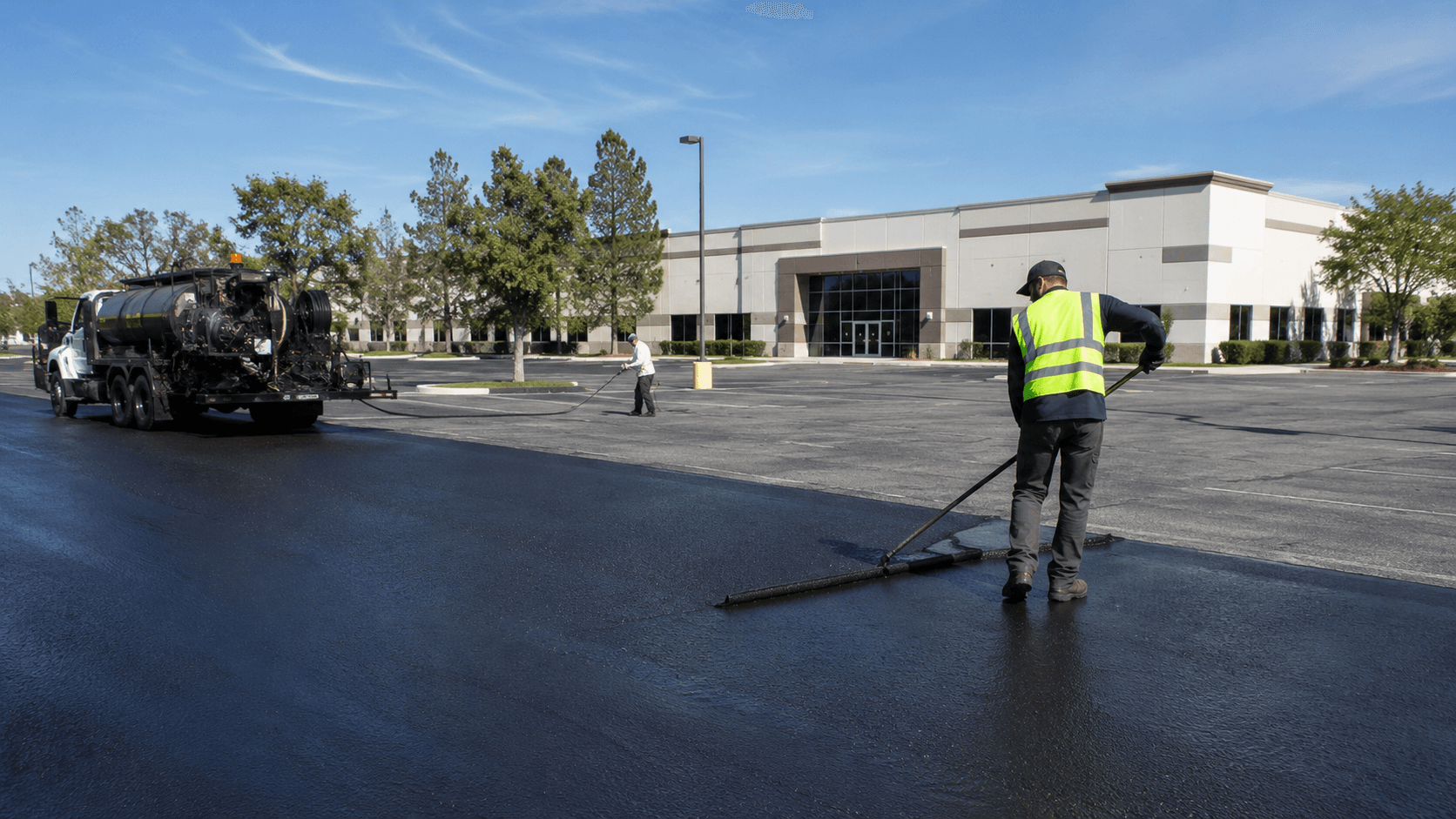
Walk across a tired parking lot and you'll usually see two different problems at once: cracks snaking through the surface, and a faded gray color where the black used to be. Two problems , and they need two different fixes.
That's the part most property owners miss. Seal coating and crack filling get talked about like you have to pick one. You don't. They solve different things, and plenty of lots need both.
The Core Difference
- Crack filling fixes a specific problem , open cracks letting water into your pavement.
- Seal coating is surface protection , a coat over the whole lot that slows wear and aging.
One treats damage. The other prevents it.
What Crack Filling Actually Does
Cracks are the single biggest threat to your pavement , not because of how they look, but because of what they let in.
When water gets into a crack, it reaches the base layer under your asphalt. Freeze-thaw cycles widen the gap, the base weakens, and that small crack becomes a pothole. According to the FHWA, sealing and filling cracks is one of the most cost-effective ways to keep water out and extend pavement life.
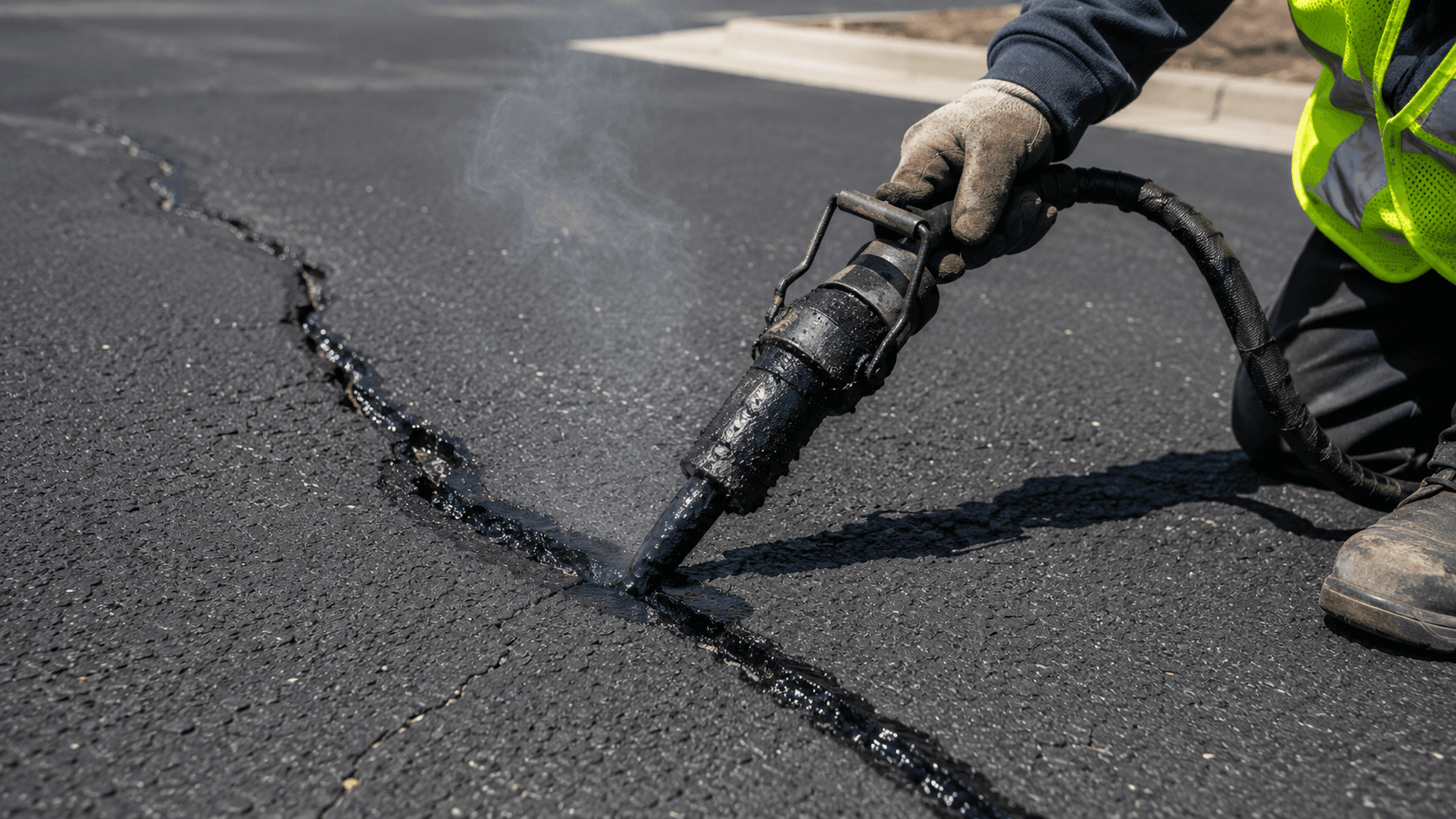
On commercial jobs we use hot rubber crack sealing , a flexible, hot-applied material that:
- Fills the crack completely instead of just bridging the top
- Stays flexible through freeze-thaw movement so it doesn't reopen
- Blocks water before it reaches your base
If you have visible cracks, this is the work that protects your investment. Skip it, and no amount of seal coating will save you.
What Seal Coating Actually Does
Seal coating is a protective layer applied over your entire surface. It doesn't repair cracks , it shields good asphalt from what wears it down.
A proper two-coat seal coat:
- Blocks UV rays and oxidation that dry out and grey your pavement
- Resists oil, gas, and chemical spills that break down asphalt
- Restores that deep black, freshly-paved look
- Slows surface wear so you repave less often
Think of it like sealing a wood deck. It won't fix a rotted board , but it keeps healthy wood from rotting in the first place.
Seal Coating vs Crack Filling at a Glance
| CRACK FILLING | SEAL COATING | |
|---|---|---|
| What it does | Seals open cracks | Protects the whole surface |
| Main job | Stops water damage | Slows aging and wear |
| Applied to | Individual cracks | Entire lot |
| When you need it | Visible cracking | Dull, grey, or aging surface |
| Typical lifespan | Several years per fill | 2–3 years per coat |
So Which Does Your Lot Need?
Here's the simple way I assess it on a walk-through:
- You see cracks? → Crack filling, first.
- Surface looks grey, dry, or faded but no real cracks? → Seal coating.
- Both cracks and a worn surface? → You need both , and the order matters.
Most commercial lots that haven't been touched in a few years need both.
Your Climate Changes the Answer
Where your property sits matters more than people expect. We pave across 45+ states, and the same lot ages very differently depending on the weather.
- Cold, freeze-thaw climates (Northeast, Midwest): cracks form and spread fast. Crack filling becomes the priority , water freezing inside cracks is what tears lots apart.
- Hot, high-UV climates (South, Southwest): oxidation is the bigger enemy. Surfaces gray out and dry quickly, so seal coating on a steady cycle matters most.
If you own properties in multiple states, they won't all need the same treatment on the same schedule. That's worth keeping in mind when you budget.
What Does Each One Cost?
Straightforward ballpark numbers for commercial work , your exact price depends on lot size and condition:
- Crack filling (hot rubber): roughly $0.50–$3.00 per linear foot of crack
- Commercial seal coating (two-coat): roughly $0.10–$0.25 per square foot
- Both together on a mid-size lot (20,000–50,000 sq ft): commonly a few thousand dollars, far less than the cost of repaving
The big picture: Maintenance is cheap compared to replacement. A full asphalt rebuild can run several dollars per square foot. Crack filling and seal coating exist to keep you from ever getting there. A free site assessment confirms the real number before you commit.
Why Order Always Matters
This is where I see contractors cut corners. Crack filling always comes before seal coating. Always.
Seal coat over an unfilled crack and you've just buried the problem. The crack keeps moving, the seal coat splits right above it, and water still gets in. You paid for protection you didn't actually get.
On every FineLines seal coating job, crack filling is completed first , it's standard practice, not an upsell. That sequence is the whole reason the work lasts.
A Simple Maintenance Rhythm
You don't need to overthink this. For most commercial lots, a healthy rhythm looks like:
- Every year: walk the lot, fill any new cracks before winter
- Every 2–3 years: seal coat the full surface (with crack filling done first)
- Anytime: address potholes or failed areas with proper repair, not cold patch
Stick to that and you'll add years to your pavement for a fraction of replacement cost.
FAQs
Can I just seal coat and skip the crack filling?
Only if your lot genuinely has no cracks. If it does, the seal coat will split over those cracks within a season and water still reaches your base. On any lot with cracking, filling comes first , every time.
How often should a commercial lot be seal coated?
Most commercial lots benefit from seal coating every 2–3 years, sooner for high-traffic properties or harsh-winter climates. Crack filling is done as needed whenever new cracks appear, usually in the same maintenance visit.
Is crack filling the same as pothole repair?
No. Crack filling seals narrow cracks before they spread. Once a crack opens into a pothole or the base fails, you need a full-depth or infrared repair instead. Crack filling helps you avoid getting there.
How long before I can use the lot after each treatment?
Crack filling sets quickly and is usually drivable within an hour or two. Seal coating needs longer , typically 24–48 hours before full traffic. We phase the work and give you exact timing up front so you can plan lot access.
Free Site Assessment