
Private & Access Road Paving for Commercial Properties: What's Different
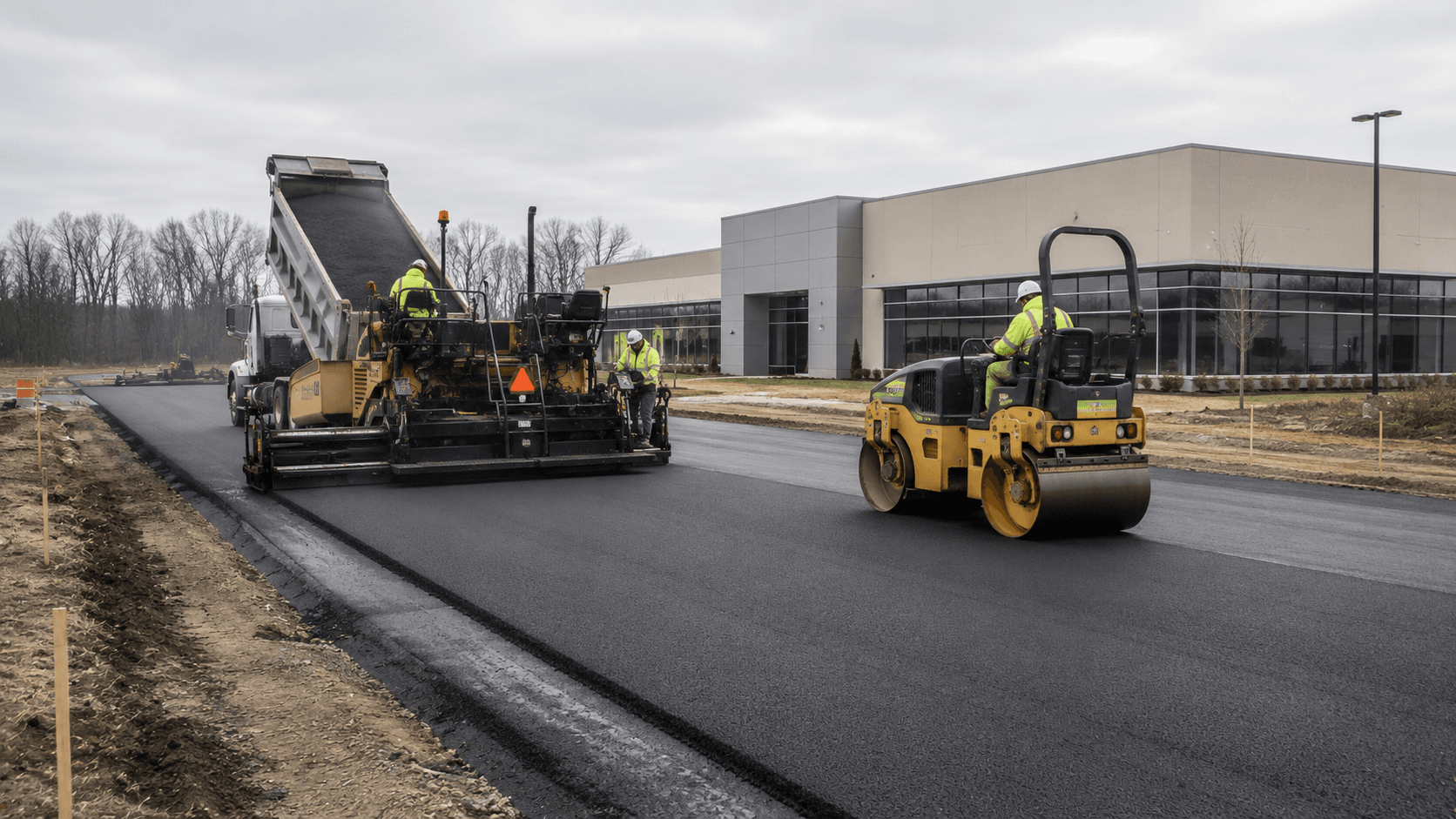
Quick Answer
Private and access roads must be built to carry fire apparatus weighing at least 75,000 pounds, with a minimum 20-foot clear width and specific turning radius, requirements a standard parking lot does not have to meet.
A private road on a commercial property gets treated like an oversized driveway more often than it should. It is not one. The moment a fire truck needs to reach a building, that road is held to a completely different standard than the parking stalls next to it.
What Counts as a Private or Access Road?
A private road is any road on a commercial property not owned or maintained by a municipality, including entrance drives, roads connecting multiple buildings on a campus, and roads leading to loading docks or rear access points. An access road specifically refers to a route that emergency vehicles need to use to reach a building, which is where the strictest requirements apply.
Why Fire Apparatus Access Roads Have Their Own Rules
Under the International Fire Code (IFC), any road that fire apparatus needs to use must be built and surfaced to support the imposed load of that equipment, a minimum of 75,000 pounds. A standard parking lot, built for passenger vehicles, is nowhere close to that load capacity.
| Spec | Fire Apparatus Access Road Requirement |
|---|---|
| Minimum load capacity | 75,000 lbs |
| Minimum clear width | 20 feet (up to 26 ft for aerial apparatus) |
| Vertical clearance | 13 ft 6 in minimum |
| Maximum grade | 10–15%, depending on jurisdiction |
| Turning radius | 42 ft minimum outside radius |
| Dead-end turnaround | Required beyond 150 ft |
How Private Road Construction Differs From Parking Lot Paving
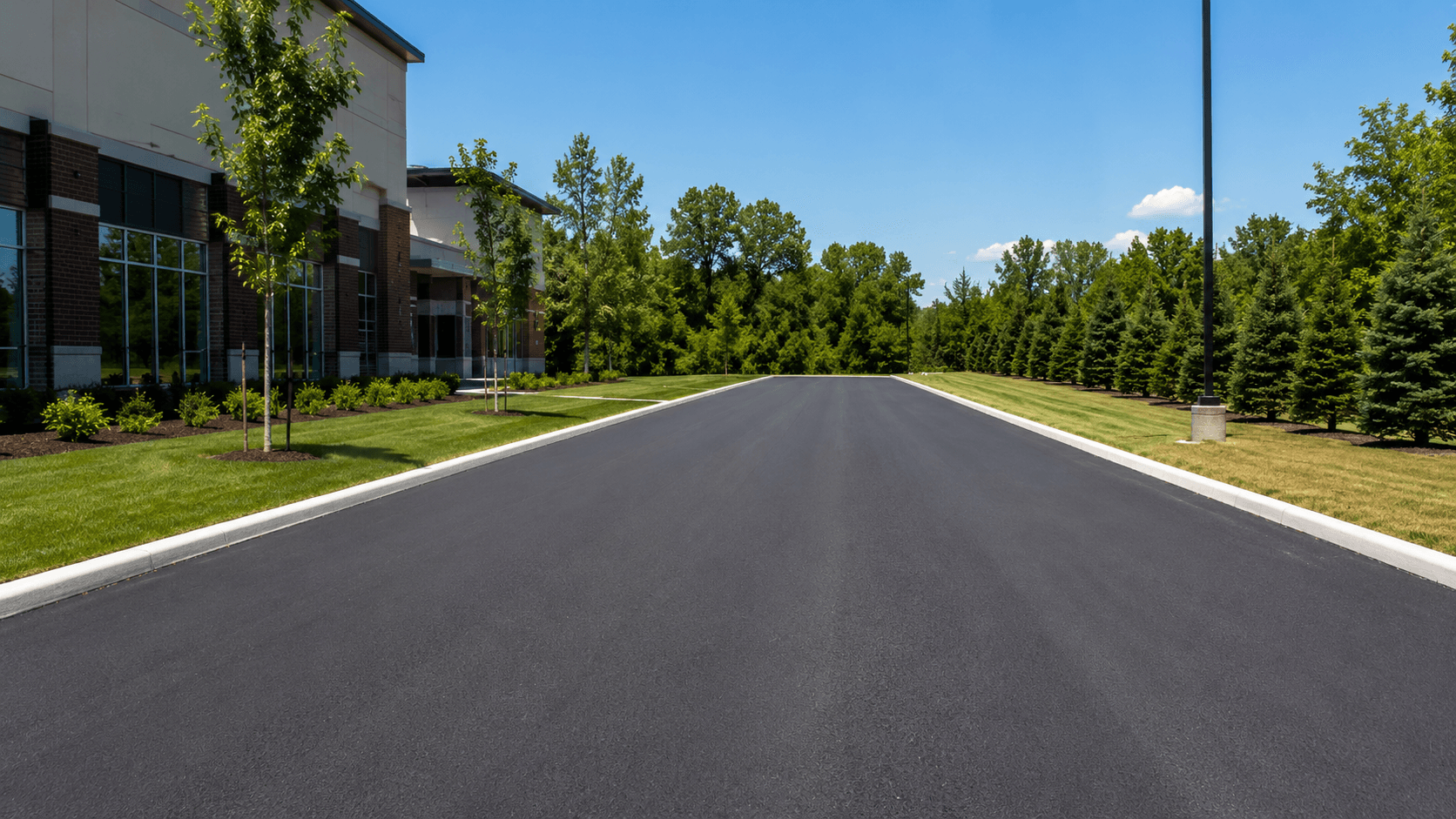
Building to that load standard changes the construction itself, not just the surface. Access roads typically need a thicker asphalt section and a more heavily compacted base than the parking stalls they connect to, similar in principle to how a loading dock apron differs from the rest of a retail lot.
- Thicker asphalt and base. A road carrying occasional fire apparatus loads needs a structural section closer to what a warehouse drive lane requires than a standard parking stall.
- Width held to the code minimum, not the site plan's preference. 20 feet clear is a hard floor, and it can be narrowed by parked cars, dumpsters, or landscaping that was not accounted for in the original design.
- No dead ends without a turnaround. Any dead-end access road over 150 feet needs an approved turnaround so fire apparatus is never forced to reverse out.
- Grade limits that don't apply to a flat parking stall. Steep site grading that would be fine in a parking area can put an access road out of compliance.
What Happens When an Access Road Isn't Built to Code
A non-compliant access road is one of the most common items flagged during fire marshal inspections on commercial properties, and unlike a striping issue, it is not a quick fix. Correcting width, grade, or turnaround problems after construction usually means real excavation work, not a repaint.
When we handle asphalt paving that includes private or access roads, we confirm fire code requirements for the specific jurisdiction before the base goes down, not after the site plan is already built around the wrong numbers.
FAQs
What load does a fire apparatus access road need to support?
A minimum of 75,000 pounds under the International Fire Code, which most jurisdictions adopt directly or with local amendments. This is significantly heavier than the load a standard parking lot is built to carry.
How wide does a private access road need to be?
20 feet of unobstructed width is the typical minimum, increasing to 26 feet where aerial fire apparatus access is required. Local fire code officials can require additional width based on specific site conditions.
Does every private road on a commercial property need to meet fire code?
Only roads that fire apparatus needs to use to reach the building qualify as fire apparatus access roads under code. Interior circulation roads not used for emergency access may follow standard commercial paving specifications instead.
What happens if a dead-end access road doesn't have a turnaround?
Any dead-end fire apparatus access road exceeding 150 feet in length requires an approved turnaround area. Without one, the road does not meet code and can be flagged during inspection or plan review.
Free Site Assessment