
Do You Need a Permit to Repave a Parking Lot?
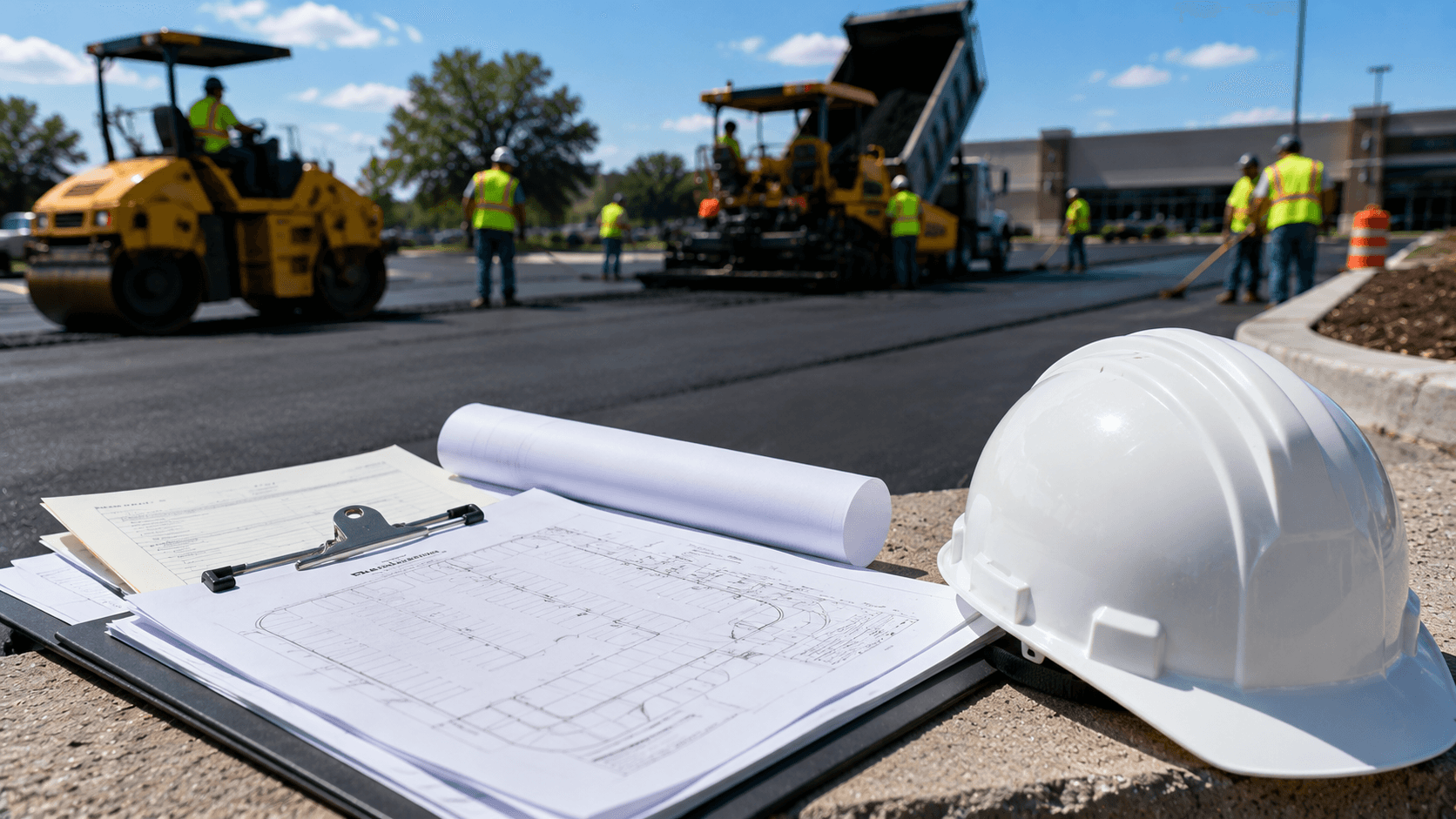
This question comes up on nearly every commercial job: “Do I need a permit for this?” And I'll be straight with you there's no single yes-or-no answer that applies everywhere, because permit rules genuinely vary from one municipality to the next.
What I can give you is the framework: the specific factors that decide it, no matter which city or state your property sits in.
I'm Gabriel, founder of FineLines. We handle permit coordination on commercial jobs across 45+ states, so here's how to think about it before you assume either way.
Why There's No One Answer
Permit requirements are set at the local level city, county, and sometimes state DOT all have a say depending on what the work touches. A rule that applies in one city may not apply thirty miles away in the next town over. Anyone who tells you a blanket “yes” or “no” without knowing your specific location and scope is guessing.
The 4 Factors That Actually Decide It
Regardless of where your property is, these are the questions that determine whether a permit is needed:
- Does the work touch public infrastructure? Anything connecting to a sidewalk, curb cut, or public street typically triggers a permit requirement, even if the rest of the job is entirely on private property.
- Is it a simple re-stripe, or does it change the structure? A straightforward re-stripe of an existing layout is far less likely to need a permit than full-depth paving, milling, or drainage changes.
- Does it affect drainage or stormwater flow? Changes to grading or drainage often fall under separate stormwater regulations, which can require their own approval.
- Does it change accessible parking? Adding, removing, or reconfiguring ADA-compliant stalls can trigger compliance review, separate from a general construction permit.

A Real Example: New York City
NYC is a useful illustration of how local rules work in practice. Work that connects to or affects a city sidewalk, curb cut, or street in New York City typically requires a NYC DOT permit. Work entirely within the property boundary, that doesn't touch city infrastructure, generally doesn't. That's the kind of city-specific detail that only comes from knowing the local rules or working with a contractor who already does.
What This Means for Multi-State Property Owners
If you own or manage commercial properties in several states, this is exactly why permit research can't be a one-time task. What was true for your New Jersey property may not be true for your Georgia property, even for the identical scope of work.
The practical answer isn't to memorize every municipality's rule book. It's to work with a contractor who checks local requirements as a standard part of every job not something you have to chase down yourself.
How FineLines Handles This
Before we start any job whether it's asphalt paving, milling, or a full overlay we confirm what your specific city and property require. That includes coordinating permits directly where applicable, so it's one less thing on your plate.
FAQs
Do I need a permit to re-stripe my parking lot?
Usually not, if it's a straightforward re-stripe of an existing layout that doesn't touch public infrastructure or change accessible parking counts. But this varies by municipality, so it's worth confirming for your specific property.
Does resurfacing a parking lot require a permit?
It depends on the scope and your location. Simple resurfacing that stays within the existing footprint often doesn't require a permit, while work involving drainage changes, milling, or anything connecting to public infrastructure is more likely to. Local rules vary, so confirm before starting.
Who is responsible for pulling permits on a commercial paving job?
This should be spelled out clearly in your contract before work begins. Some contractors include permit coordination as part of their service; others expect the property owner to handle it. Always confirm this upfront.
What happens if I pave without a required permit?
Consequences vary by municipality but can include fines, stop-work orders, or being required to redo the work to code. It's far cheaper to confirm requirements before starting than to deal with a violation after the fact.
Free Site Assessment