
Parking Lot Line Striping: The Complete Guide
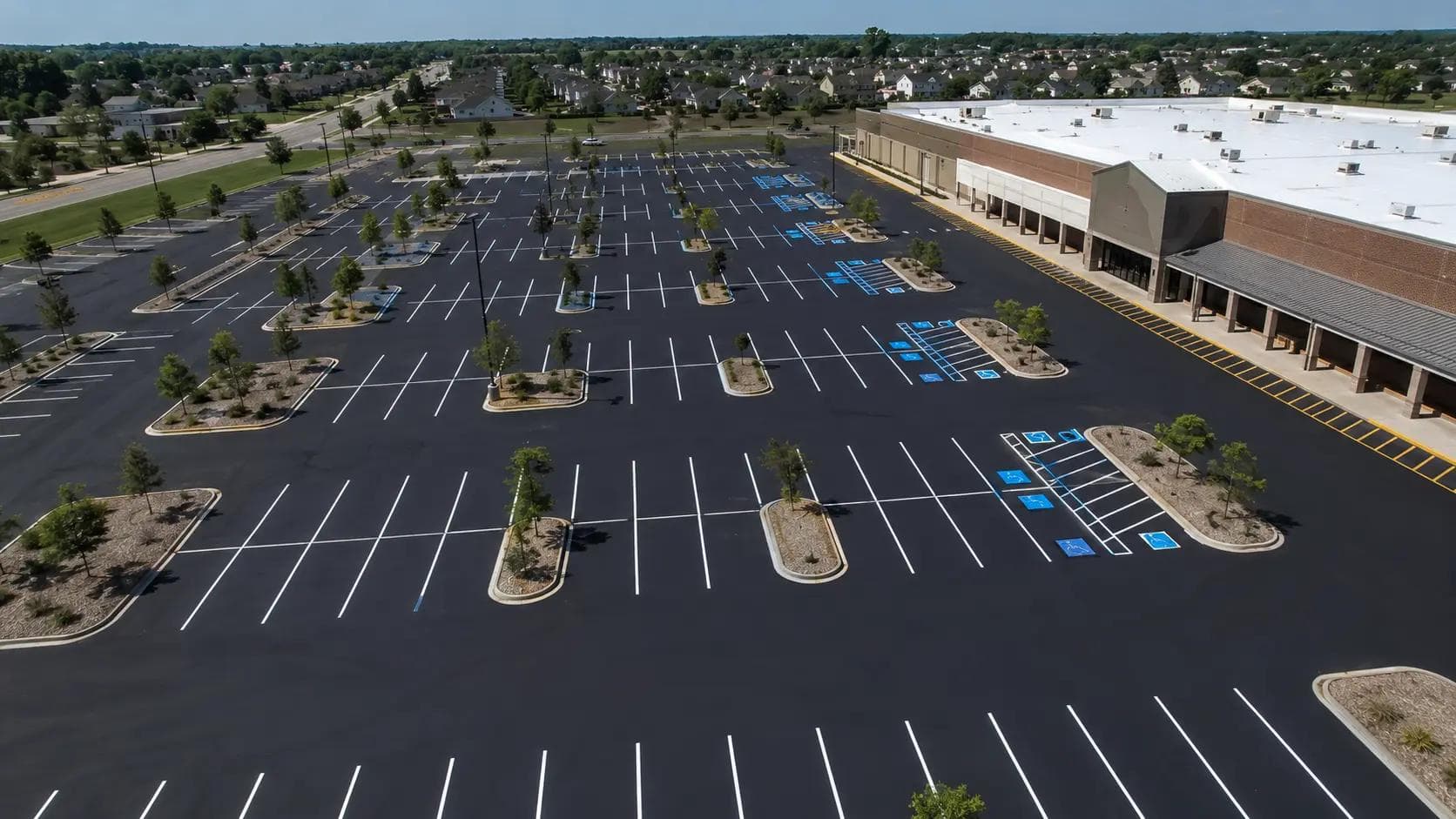
Most property owners don't think about parking lot striping until someone complains. A tenant calls about a fender bender. A fire marshal flags the lot during an inspection. Or you walk the property one morning and realize the lines have basically disappeared.
By that point, you're already behind.
Striping isn't just about appearance. It controls traffic, defines compliance, and protects you from liability. This guide covers everything you actually need to know, without the fluff.
Why Parking Lot Striping Matters More Than You Think
A well-marked lot does three things at once:
- Controls traffic flow, drivers know where to go, where to turn, where to stop
- Establishes ADA compliance, missing or incorrect accessible markings create real legal exposure
- Reduces liability, unclear fire lanes, missing no-parking zones, and faded crosswalks are documented risk factors in parking lot incidents
When markings are clear, people behave predictably. When they're faded or missing, they don't, and that becomes your problem as the property owner.
How Often Does a Commercial Parking Lot Need Re-Striping?
This is the most common question I get.
Honest answer: every 1–2 years for most commercial lots.
A few factors push that timeline shorter:
- High daily traffic volume (retail centers, hospitals, logistics facilities)
- Lots in states with harsh winters, snow plowing accelerates line wear significantly
- Dark-colored or recently seal-coated surfaces where lines fade faster visually
Lower-traffic lots, office parks, storage facilities, light industrial, can sometimes go 2–3 years between re-stripes without a compliance issue.
The simple test: stand at the lot entrance. If you can't clearly read the layout from there, it's time.
What's Actually Included in a Full Striping Job
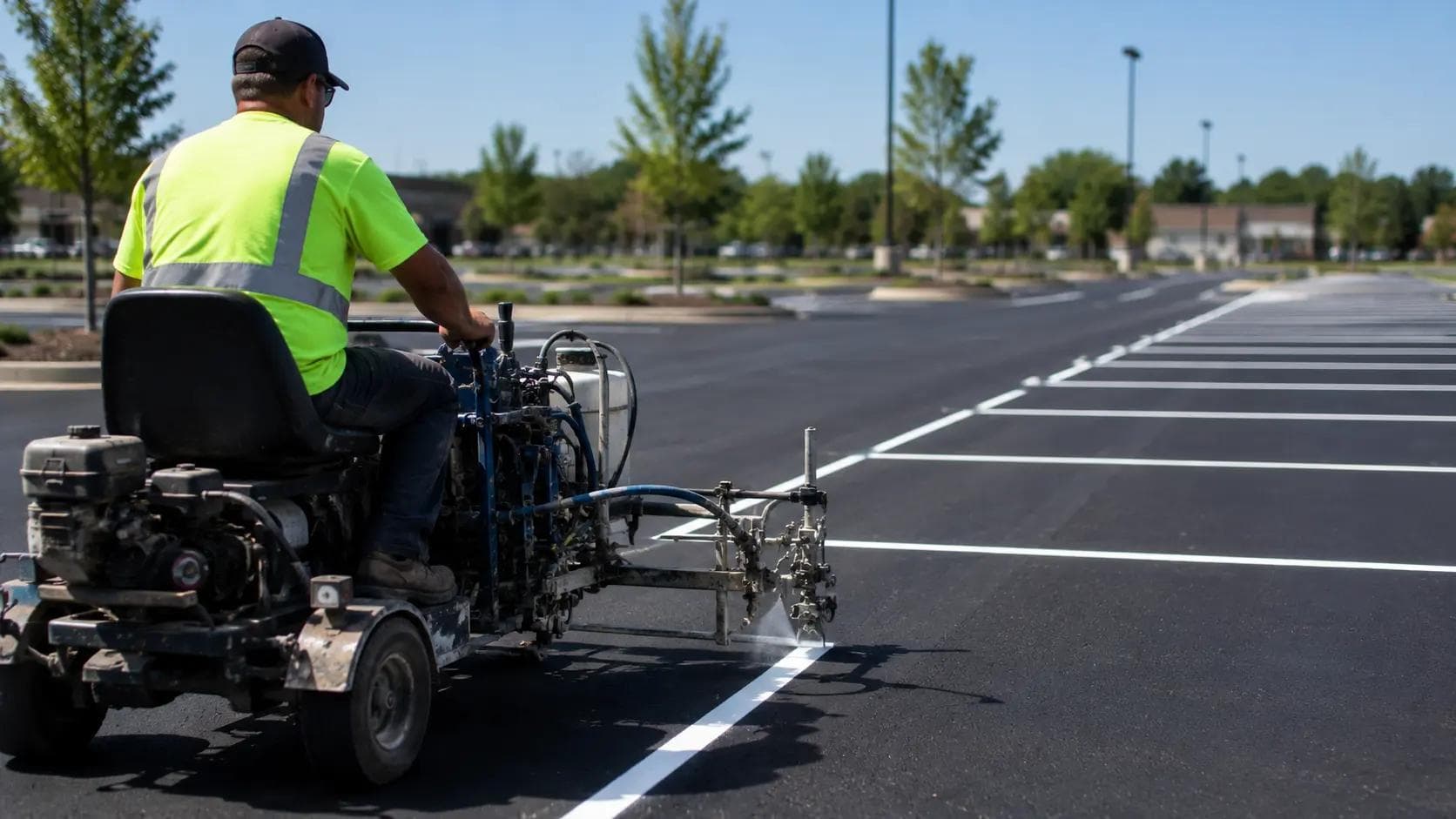
A complete commercial re-stripe typically covers:
Standard Stall Markings
Stall lines, spacing, and layout. Standard commercial stalls are 9 feet wide by 18 feet deep, though some jurisdictions require 9.5 x 18. Worth confirming locally before you re-stripe.
ADA Accessible Markings
This is where most lots have compliance gaps. ADA requires:
- A minimum number of accessible stalls based on total lot size
- Access aisles of at least 5 feet (8 feet for van-accessible stalls)
- International Symbol of Accessibility on each stall
- Proper surface slope, no more than 2% in any direction
- Signage at each accessible stall
The exact count depends on your total stall number.
Fire Lanes
Local fire codes set the requirements, width, color, and lettering. Most jurisdictions require red curb markings and "FIRE LANE, NO PARKING" lettering at specific intervals. A fire marshal citation for non-compliant fire lanes is expensive and avoidable.
Thermoplastic vs Paint, Which One?
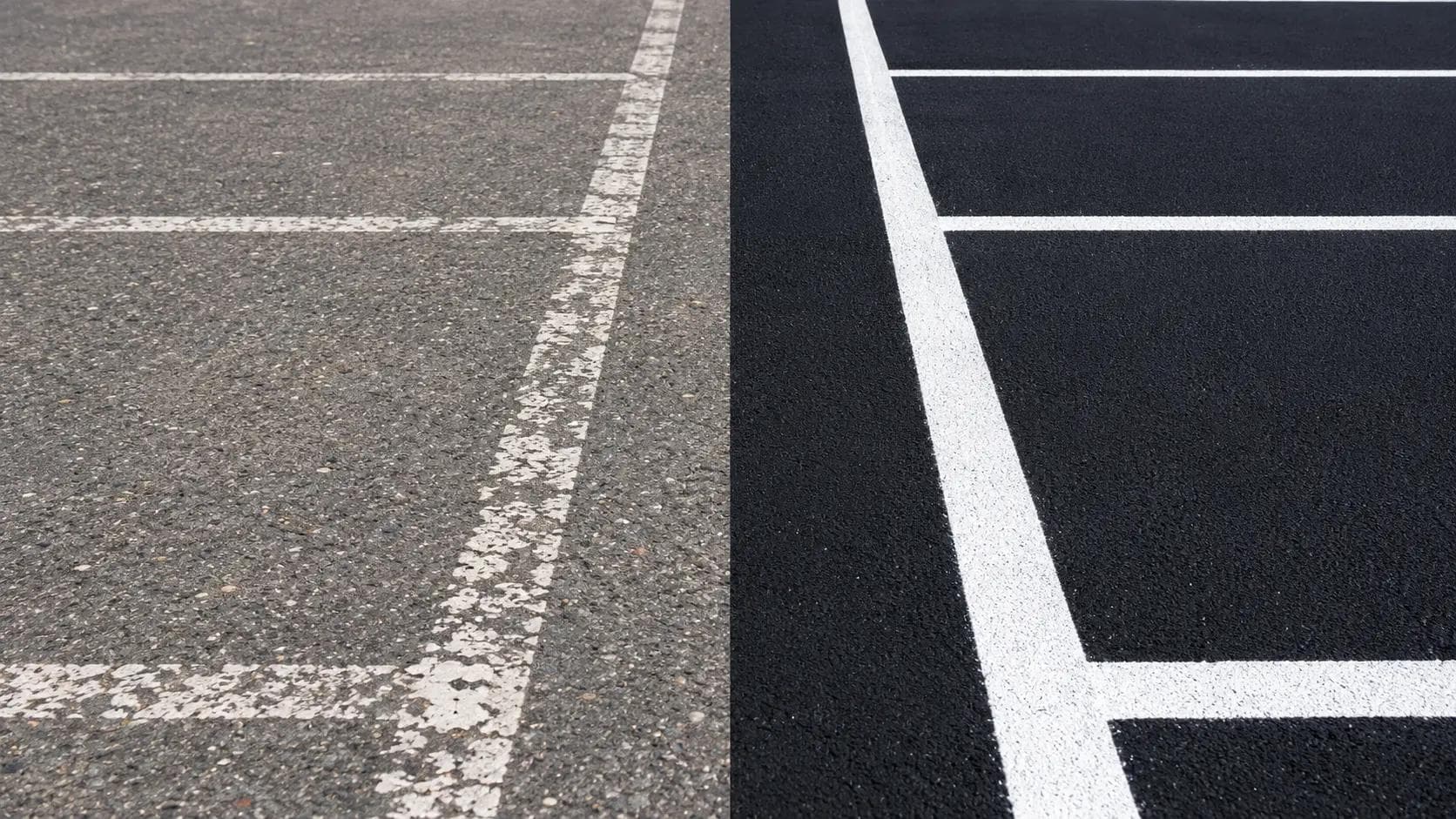
This question comes up on almost every quote.
| Standard Traffic Paint | Thermoplastic | |
|---|---|---|
| Cost | Lower upfront | Higher upfront |
| Lifespan | 1–2 years | 3–7 years |
| Best for | Low-traffic lots, re-stripes | Fire lanes, crosswalks, high-traffic areas |
| Appearance | Good when fresh | Stays sharp significantly longer |
My recommendation: use paint for standard stall lines, thermoplastic for fire lanes, crosswalks, and main traffic lanes where wear is highest. That combination gives you the best cost-to-longevity ratio on most commercial properties.
What Does Parking Lot Striping Cost?
Straightforward numbers:
- Standard re-stripe (paint, existing layout): $0.10–$0.25 per linear foot
- Full re-stripe with layout changes: $500–$3,000+ depending on lot size and complexity
- Thermoplastic application: $1.50–$3.50 per linear foot
- ADA stall package (markings + signage): $100–$300 per accessible stall
A mid-size commercial lot of 20,000 sq ft with a standard re-stripe typically runs $800–$2,500 total.
3 Things to Ask Before You Hire a Striping Contractor
1. Do you handle ADA compliance verification?
Not just marking the stalls, actually confirming the count, aisle widths, and signage meet current requirements for your property type and state.
2. Can you handle layout changes if needed?
Re-striping over an outdated layout without adjusting it is a missed opportunity. A good contractor should be able to reconfigure if the existing layout isn't working.
3. What's your line removal process?
If old markings need to come up, not just painted over, ask specifically how they do it. Mechanical grinding leaves a cleaner surface than chemical removal for most commercial applications.
FAQs
Can you stripe a parking lot right after paving?
You should wait at least 24–48 hours after paving before striping. If the lot was seal coated, wait a full 24–48 hours after the seal coat has cured. Striping over uncured surfaces causes adhesion problems and the lines won't last.
How long do parking lot lines take to dry?
Standard traffic paint is typically dry to the touch within 30–60 minutes and ready for traffic within 1–2 hours. Thermoplastic is ready almost immediately after application. We always communicate the exact window before starting so you can plan lot access.
Do you need a permit to re-stripe a parking lot?
In most cases, no permit is required for a standard re-stripe of an existing layout. Layout changes, particularly those affecting ADA stall count or fire lane placement, may require local approval depending on your municipality. Worth a quick check before any major reconfiguration.
What happens if ADA stall count is wrong on my property?
Under the ADA, non-compliant accessible parking is considered a barrier to access and can result in complaints, lawsuits, and required remediation. The Department of Justice actively investigates ADA complaints. It's one of the easiest compliance issues to fix and one of the most expensive to ignore.
How do I know if my lot needs a full layout redesign vs a simple re-stripe?
If traffic flow is awkward, stalls are too narrow, or the accessible stall count is wrong, it's worth redesigning. If the existing layout works and lines are just faded, a straight re-stripe is all you need. We assess this on every site visit.
Can striping be done in sections to avoid closing the whole lot?
Yes. We regularly phase striping jobs across multiple mornings or evenings to keep portions of the lot accessible. For retail centers and occupied multi-family properties, phasing is standard practice.
Free Site Assessment