
Parking Garage vs. Surface Lot Striping: What's Different
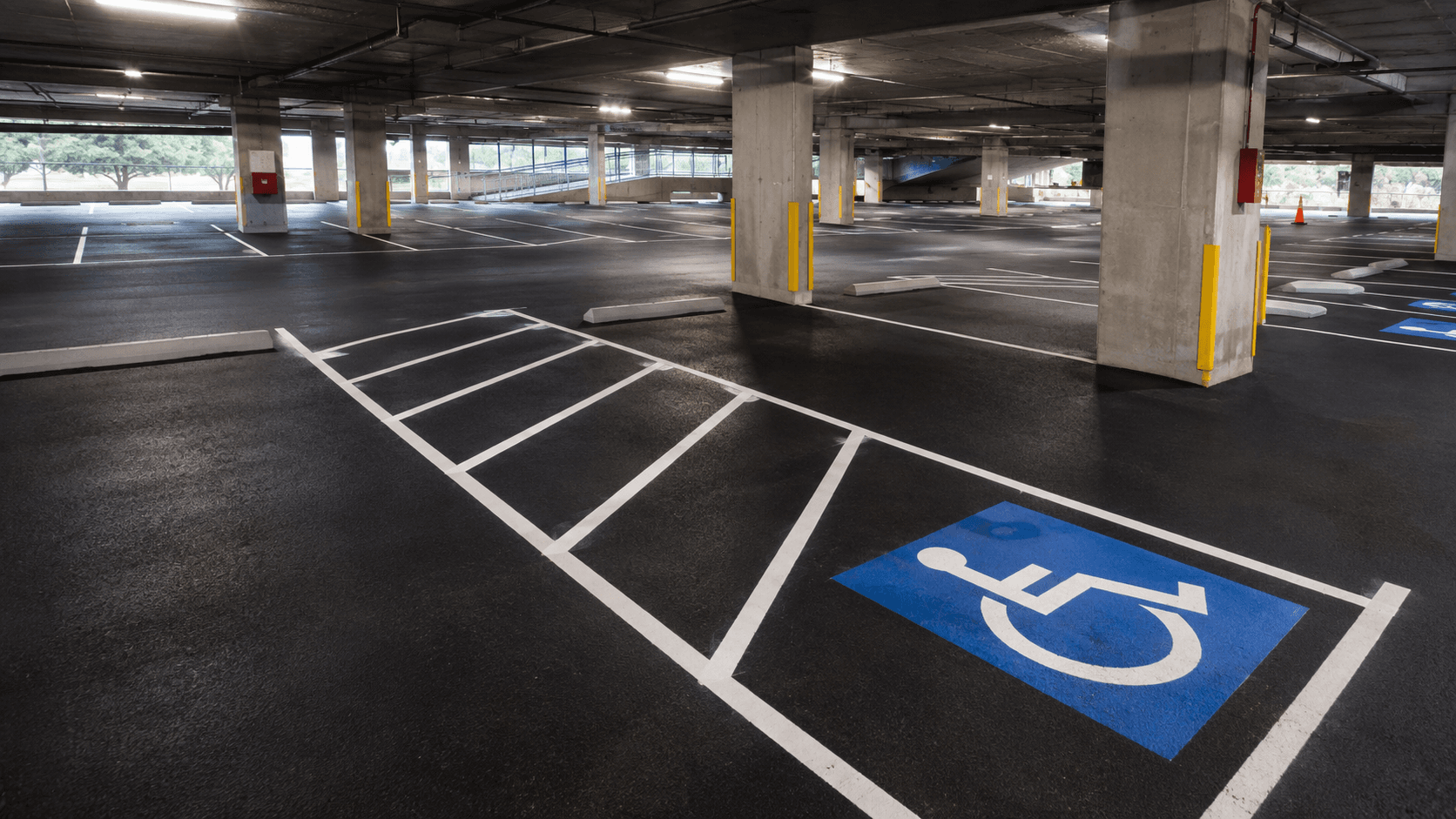
A parking garage and a surface lot might look like the same job on a quote sheet. They're not. Different lighting, different structural constraints, different codes , and treating a garage like an outdoor lot with a roof is exactly how properties end up with striping that doesn't hold up or doesn't pass inspection.
I'm Gabriel, founder of FineLines. We've striped both across 45+ states, so let me walk through what actually changes when the job moves from asphalt under the sky to a structure.
Why a Garage Isn't Just an Indoor Lot
Three things separate a parking structure from a surface lot, and each one changes how the striping job gets done:
- Lighting is artificial and inconsistent. Corners, ramps, and lower levels often sit in shadow even with overhead lighting. Lines that read clearly outdoors can disappear in a poorly lit bay.
- Vertical clearance is fixed. A surface lot has no ceiling. A garage does , and that ceiling height dictates where van-accessible stalls and their access routes can go.
- Fire code treats structures differently. Multi-level garages often have stricter fire lane and travel-path requirements than an open surface lot of the same size.
Reflective Materials Aren't Optional Here
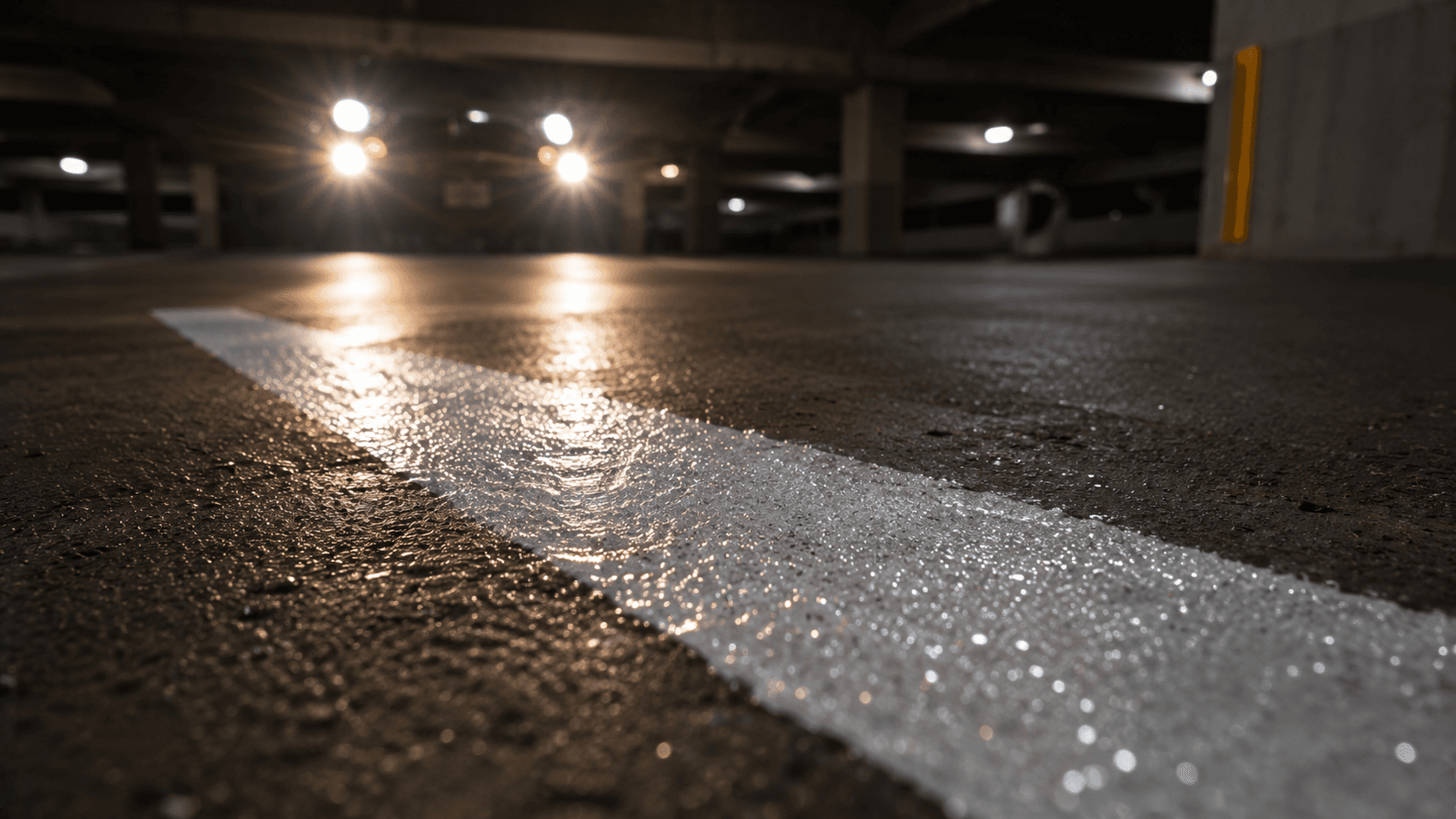
On a surface lot, standard traffic paint works fine in daylight. In a garage, visibility is a real problem, not a preference.
Reflective paint and glass beads embedded in the striping material catch headlight beams and make lines readable in exactly the low-light conditions garages create. It costs a bit more upfront, but skipping it in a structure is a visibility and safety issue, not just a cosmetic one.
ADA Rules Get Tighter, Not Looser
The core ADA numbers are the same everywhere , 1 accessible space per 25 total, roughly 1 in 6 of those van-accessible. What changes in a garage is the physical geometry around them:
- 98 inches of vertical clearance is required at van-accessible spaces and along the entire vehicle route those vans use to get there , not just at the stall itself. In a garage with low beams or sprinkler pipes, this can eliminate certain levels or bays from qualifying.
- Surface slope still can't exceed roughly 2% in any direction , trickier to hold consistently on a structural deck than on graded asphalt.
- Accessible routes from the stall to the elevator or stairwell need to be planned into the striping layout, not treated as an afterthought.
Missing the clearance requirement on one level is one of the most common compliance gaps we find when we're called in to fix an existing garage's striping.
Fire Lanes and Circulation Work Differently
In a surface lot, fire lanes are usually a straightforward perimeter or a lane along the building. In a structure, fire access often has to account for:
- Turning radius for fire apparatus on ramps and at tight corners
- Level-by-level access requirements that vary by local fire code
- One-way traffic flow that has to stay compliant and consistent across ramps
Local fire marshals treat parking structures as their own category in many jurisdictions, with their own inspection checklist. Confirming those specifics before striping saves a redo later.
Quick Comparison
| Surface Lot | Parking Garage | |
|---|---|---|
| Lighting | Natural daylight | Artificial, often inconsistent |
| Paint type | Standard traffic paint often fine | Reflective paint/beads recommended |
| Vertical clearance | Not a factor | 98" min. at van spaces + route |
| Fire lane layout | Perimeter/building-line based | Ramp turning radius, per-level rules |
| Common failure point | Faded lines | Missed clearance or route compliance |
What This Means for Your Next Restripe
If your property has a garage that hasn't been restriped since it was built, it's worth a fresh look , not just a repaint of the existing lines. Codes and clearance interpretations shift, and a straight repaint over an outdated layout just locks the same gaps back in. Our complete parking lot line striping guide covers the surface-lot side of striping in more depth , worth a read alongside this one. When we handle a structure, we confirm current clearance and fire code requirements for that specific property before a single line goes down.
FAQs
Does a parking garage need different paint than a surface lot?
Yes, in most cases. Reflective paint or glass beads are strongly recommended in garages because artificial lighting and shadowed corners make standard paint harder to see. Surface lots in daylight generally don't need this.
What is the vertical clearance requirement for van-accessible spaces in a garage?
A minimum of 98 inches is required at the van-accessible space itself and along the vehicle route leading to it. This is specific to structures with a fixed ceiling height and doesn't apply to open surface lots.
Are fire lane rules different in a parking structure?
Often, yes. Many jurisdictions apply separate fire code requirements to multi-level structures, accounting for turning radius on ramps and level-by-level access. It's worth confirming local fire marshal requirements specifically for structures before striping.
How often should a parking garage be restriped?
Similar to surface lots, every 1 to 2 years for most properties, sooner for high-traffic garages. Because visibility is already a bigger challenge indoors, faded lines in a garage create a safety issue faster than the same wear would outdoors.
Free Site Assessment