
Striping New York City's Parking Garages
Quick Answer
NYC has over 214,000 verified parking garages, and the NYC Building Code sets specific requirements for these structures, including a 7 foot minimum clear height and vehicle barrier systems, that don't apply to a surface lot.
New York City has more parking garages than most states have parking lots. That density, combined with the city's specific building code, makes garage striping here a different job than it is almost anywhere else.
I am Gabriel, founder of FineLines. We've striped garages across New York City, including a full parking garage project in the Bronx, stall markings, directional arrows, fire lanes, and ADA compliant markings throughout every level, so here is what actually matters for this kind of structure in this specific city.
Just How Many Parking Garages Does NYC Actually Have?
According to NYC Department of Buildings and DoITT open data, the city has more than 214,000 verified parking garages covering nearly 78 million square feet. That's an extraordinary concentration of multi-level structures in one market, and it's exactly why garage-specific striping expertise matters more here than in most other cities.
What NYC Building Code Requires for Parking Structures
Under NYC Building Code Section 406, parking garages must maintain a minimum clear height of 7 feet in vehicle and pedestrian traffic areas, and vehicle barrier systems are required at the end of drive lanes and parking spaces wherever the drop below exceeds a set threshold. These are structural and safety requirements that shape where striping and signage can go, not just how it looks.
| Requirement | NYC Building Code Section 406 |
|---|---|
| Minimum clear height | 7 feet in vehicle and pedestrian traffic areas |
| Vehicle barrier systems | Required at drive lane and stall ends above a set drop height |
| Van-accessible clearance | Must conform to International Code Council (ICC) A117.1 accessibility standards |
Why Reflective Striping Matters More in a Dense City Garage
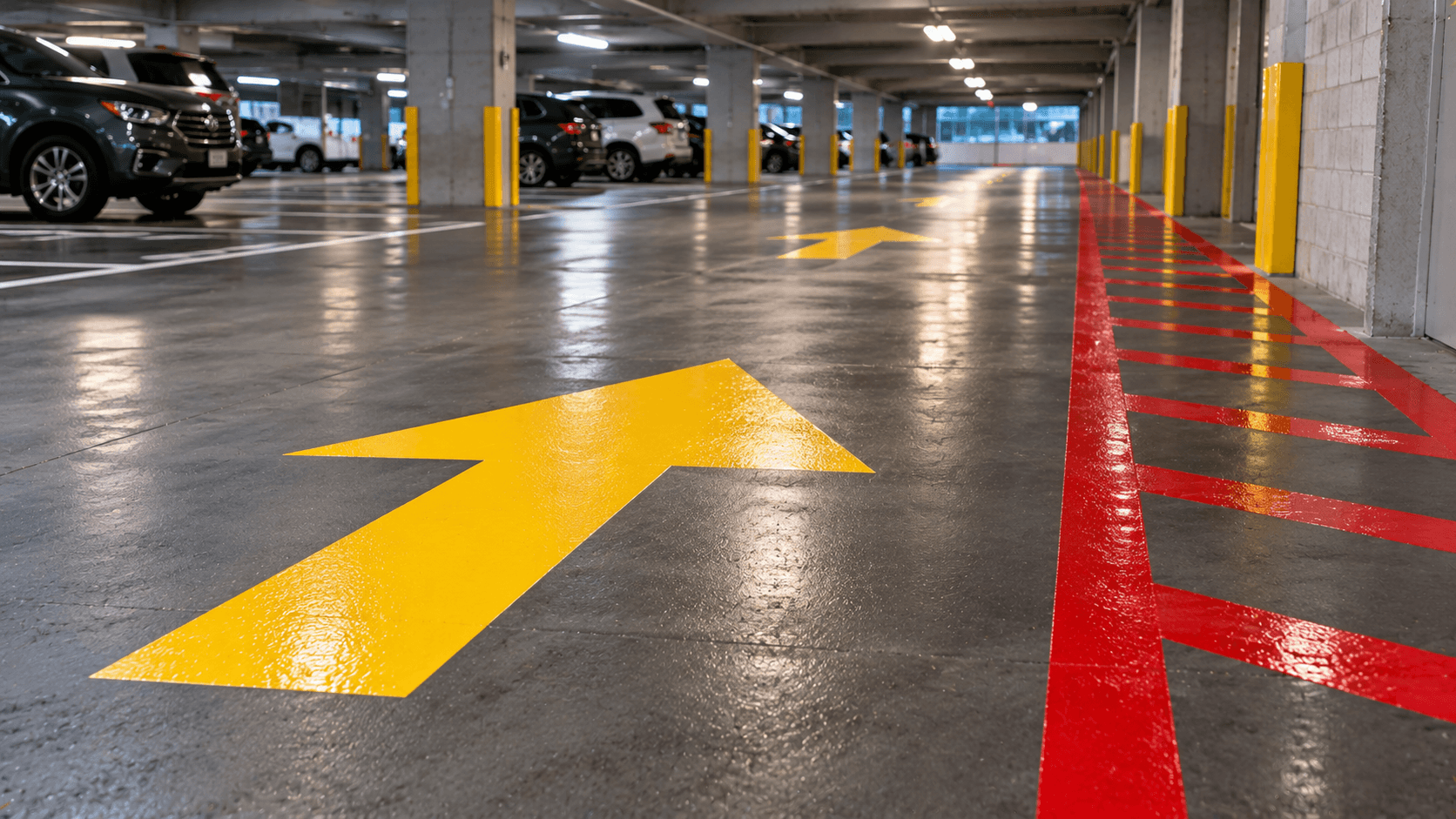
Artificial lighting, low ceilings, and heavy daily turnover make visibility a real safety issue in NYC garages, more so than in a suburban structure with better sightlines and lower vehicle density. Reflective paint and thermoplastic markings hold up better under these conditions than standard paint, and they matter more here given how many vehicles move through a typical NYC garage level in a day.
What a Full NYC Garage Striping Project Covers
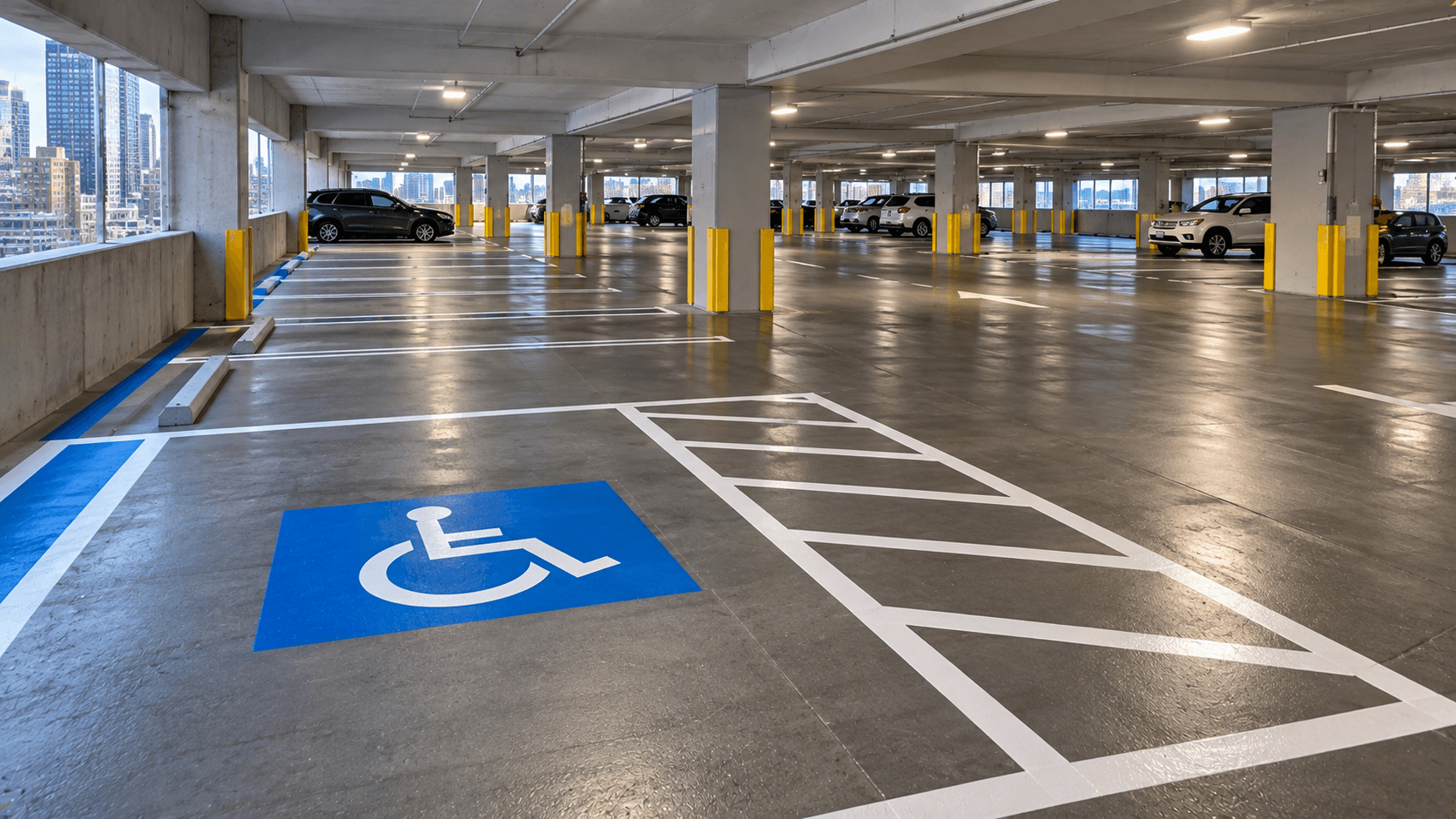
A complete project covers four elements: stall markings sized to the structure, ADA-compliant accessible stalls, fire lane markings, and directional wayfinding, each adapted to the specific constraints of a multi-level building.
- Stall markings sized and spaced correctly for the structure's actual clear height and column layout
- ADA-compliant accessible stalls with the vertical clearance van-accessible spaces require
- Fire lane markings that account for ramp turning radius between levels
- Directional arrows and wayfinding for one-way traffic patterns common in multi-level structures
Our guide to parking garage vs. surface lot striping covers the general differences between structures and surface lots in more depth. If your property is in New York, we confirm current clearance and code requirements for your specific structure before striping a single line.
FAQs
How many parking garages are in New York City?
More than 214,000 verified parking garages, covering nearly 78 million square feet, according to data sourced from NYC Department of Buildings and DoITT records.
What is the minimum clear height for a NYC parking garage?
Under NYC Building Code Section 406, vehicle and pedestrian traffic areas in parking garages must maintain a minimum clear height of 7 feet.
Do NYC parking garages need vehicle barrier systems?
Yes, at the end of drive lanes and parking spaces where the vertical drop to the level below exceeds the code's threshold, NYC Building Code requires a vehicle barrier system to be in place.
Why does reflective striping matter more in a NYC parking garage?
Artificial lighting, lower ceilings, and heavy daily vehicle turnover make visibility a real safety factor in dense city garages. Reflective paint and thermoplastic markings stay visible under these conditions better than standard paint.
Free Site Assessment