
Multi-Family & Apartment Complex Paving: Cost & Phasing
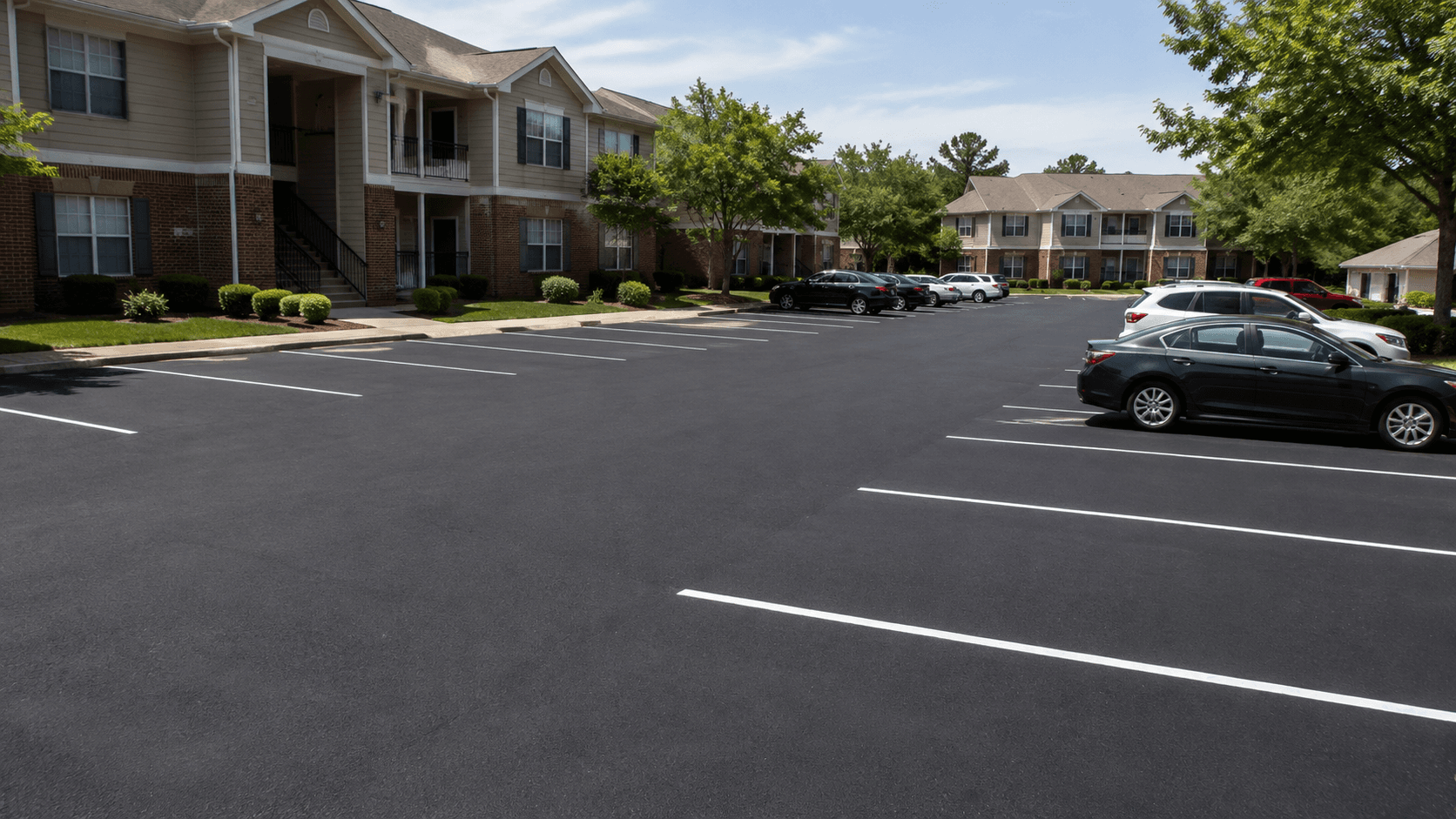
Paving a multi-family property is a different job than paving a retail centre, and not because the asphalt is any different. It's because the people affected by the work live there. A retail lot closes for a day and customers go elsewhere. A resident's only parking spot closes for a day, and that's their car blocked in at their home.
I'm Gabriel, founder of FineLines. We've paved multi-family properties across 45+ states, so here's what actually matters when the job is a place people live, not just a place people visit.
Why Multi-Family Paving Needs a Different Plan
Apartment and multi-family paving differs from most commercial work in three specific ways: vehicles are parked overnight every night, assigned parking complicates how work can be phased, and fire access routes can't be interrupted even temporarily.
- Vehicles are parked overnight, every night. There's no “closed” period the way a retail lot has after hours. Residents need access to their vehicles essentially around the clock.
- Assigned or unit-specific parking complicates phasing. If residents have designated spots, you can't just close half the lot randomly. The plan has to account for which spots belong to which units.
- Fire access and emergency vehicle routes can't be interrupted, even temporarily. Multi-family properties fall under the same NFPA fire code requirements for fire lane access as any commercial property, which limits how work can be sequenced through the site.
Phasing: The Core of a Good Multi-Family Paving Plan
The single biggest factor in a successful apartment paving project is how the work gets sequenced, not the paving itself.
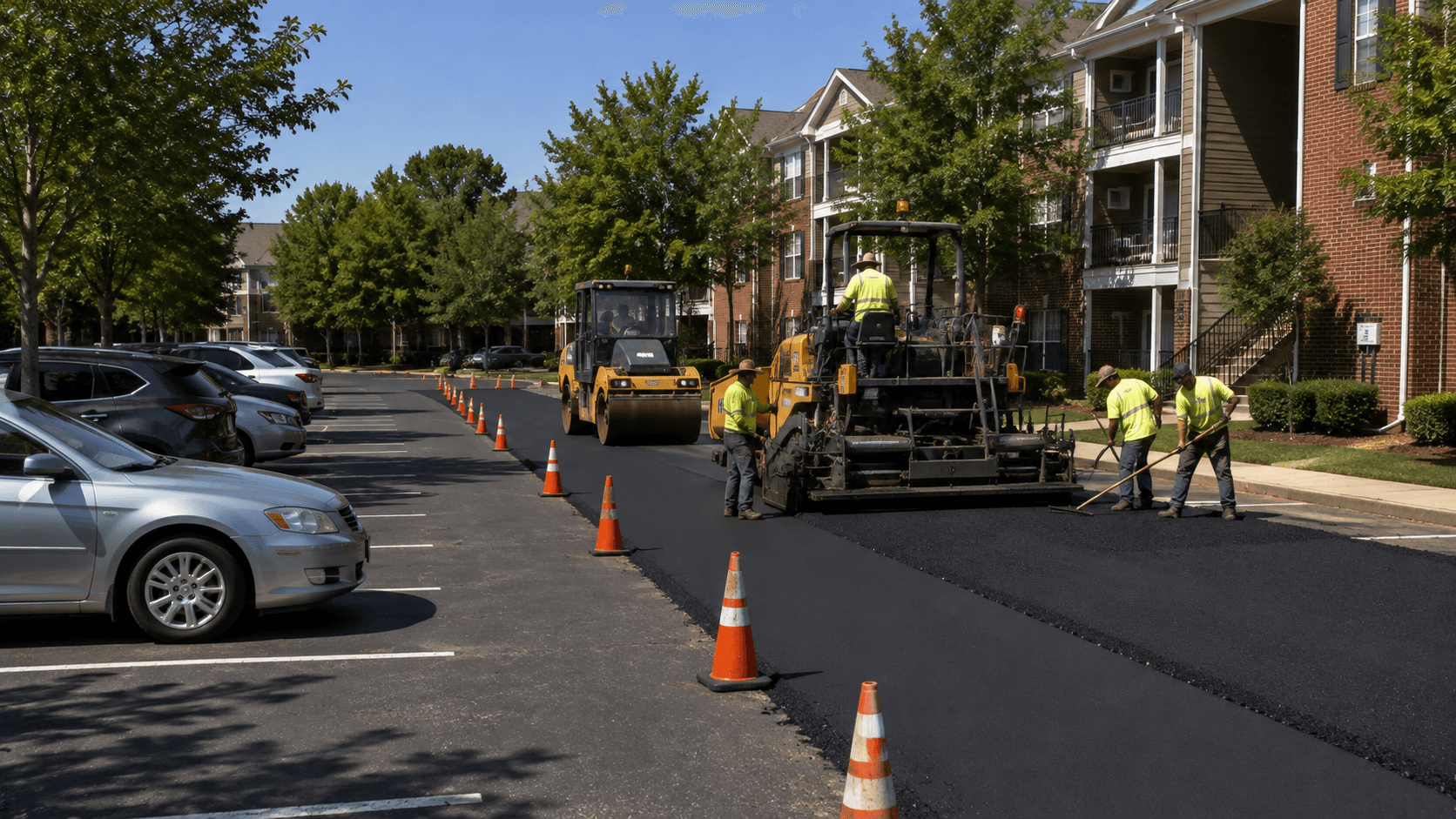
- Section-by-section closures, working through the property in phases so most residents always have access to parking somewhere on-site.
- Advance resident notice, posted and often distributed directly, giving people time to plan around specific closure windows.
- Temporary parking arrangements, sometimes using an overflow area or nearby section not currently under construction.
- Night or early-morning work where possible, to minimize the number of hours residents are affected.
What to Prioritize on a Multi-Family Property
Four things matter most on a multi-family property: a strict seal coating and crack filling schedule, clear fire lane markings, ADA stalls placed on the shortest route to entrances, and durable striping that holds up to daily resident traffic.
- Seal coating and crack filling on a strict schedule. Multi-family lots see constant daily traffic from residents, so staying ahead of maintenance matters more here than on a lower-traffic office lot. Our commercial parking lot maintenance schedule lays out the full cadence this kind of property should run on.
- Clear fire lane and emergency access markings. With cars parked everywhere overnight, fire lane compliance is one of the most commonly overlooked issues on residential-style properties.
- ADA-compliant accessible stalls near building entrances, not just technically present somewhere in the lot, but placed on the shortest accessible route to the units and common areas that need them.
- Durable striping, since constant daily parking and unparking wears lines faster than a lot that only sees traffic during business hours.
Common Property Types We See This On
| Property Type | Key Consideration |
|---|---|
| Garden-style apartments | Assigned parking phasing, resident communication |
| High-rise multi-family | Structured parking, ADA + fire code overlap |
| Town home communities | Private roads plus individual driveways/access |
| Senior/assisted living multi-family | Accessible route priority, minimal disruption |
A Real Example
On a multi-family property in Tallahassee, Florida, we handled a full mill and pave across a property with multiple buildings and assigned resident parking. The job was sequenced building by building, with advance notice given before each section closed, so residents always had access to parking somewhere on the property throughout the project.
What This Means for Your Property
If you manage a multi-family or apartment property, the paving work itself, whether that's asphalt paving, seal coating, or striping, usually isn't the hard part. The phasing plan around residents is. A contractor who's done this kind of property before will build that plan before the crew ever shows up, not figure it out on day one.
FAQs
Can a multi-family parking lot be repaved without residents losing access to parking?
Yes, with proper phasing. Working section by section, giving advance notice, and sometimes arranging temporary overflow parking allows most residents to retain access somewhere on the property throughout the project, rather than closing the entire lot at once.
Do apartment complexes have different fire lane requirements than retail lots?
The core fire code principles are similar, but multi-family properties with overnight parking and higher vehicle density often see more fire lane violations in practice, simply because cars are parked in the same spots around the clock. Clear, durable fire lane markings matter more here.
How often should a multi-family parking lot be seal coated?
Often every 2 to 3 years, similar to other commercial properties, though high-density multi-family lots with constant daily traffic sometimes benefit from staying on the shorter end of that range.
What's the biggest mistake in planning multi-family paving projects?
Underestimating the phasing and communication plan. Treating a multi-family lot like a retail lot that simply closes after hours leads to residents losing parking access unexpectedly, which is the most common source of complaints on these projects.
Free Site Assessment