
Great Lakes Parking Lots: Lake-Effect Snow and Salt Damage
Quick Answer
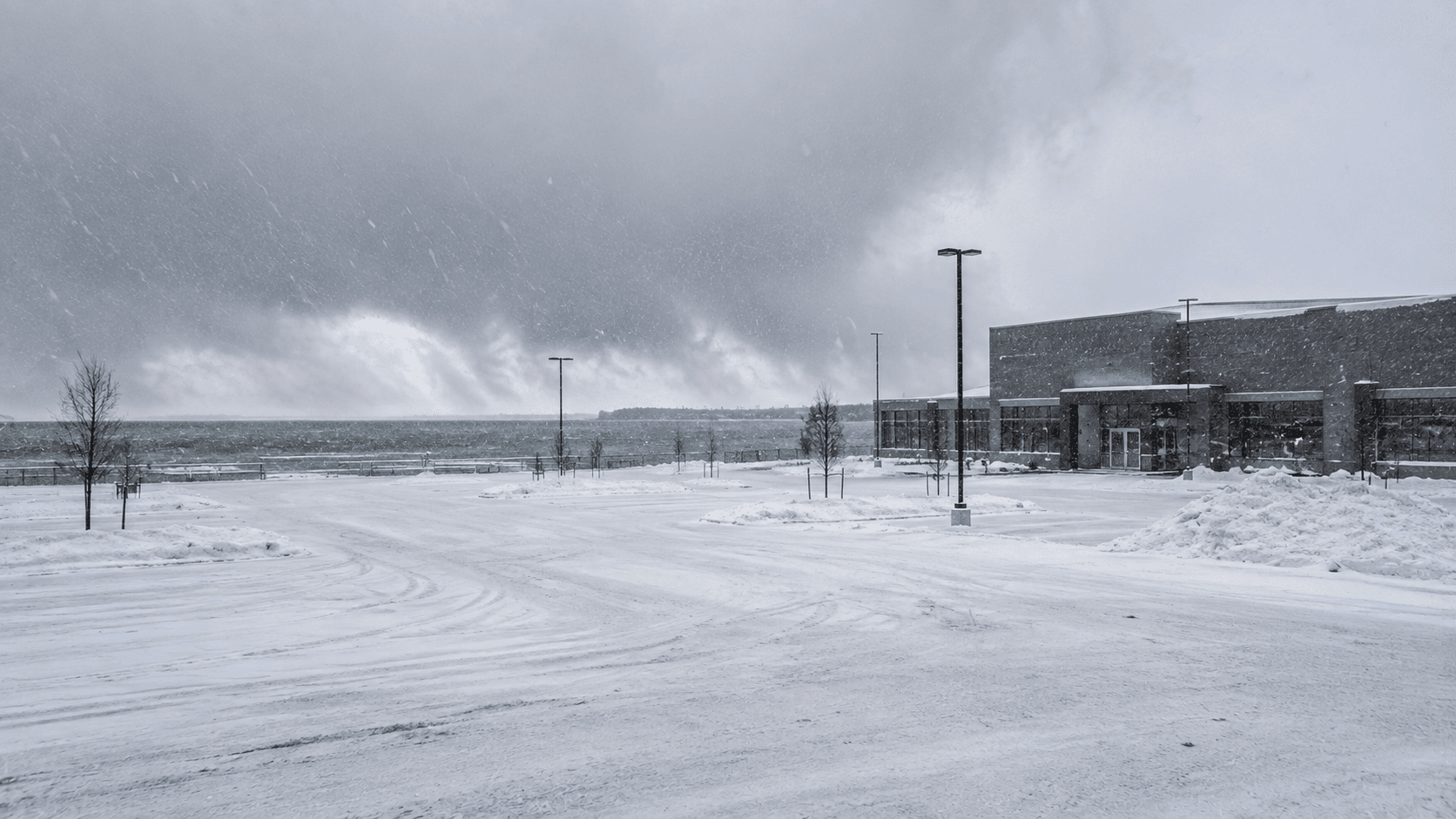
Lake-effect snow forms when cold air passes over warmer lake water, and it can dump 2 to 3 inches of snow per hour in narrow bands, far more localized and intense than typical regional snowfall.
Two commercial properties twenty miles apart, both near a Great Lake, can have completely different winters. One gets a normal regional snowfall. The other gets buried in a lake-effect band that barely touched the first one. That difference matters for how you plan pavement maintenance.
I am Gabriel, founder of FineLines. We maintain commercial lots across the Great Lakes region, so here is how lake-effect snow actually works and what it means for your property.
What Is Lake-Effect Snow?
Lake-effect snow forms when cold air moves across the relatively warmer surface of a Great Lake, picking up moisture that then falls as heavy, localized snow once it reaches land. According to the University of Michigan's Great Lakes climate research program, these bands can produce dramatically more snowfall in one location than in another just a short distance away.
Which Areas Actually Get Hit Hardest?
This is the part that surprises property owners: lake-effect snow is not evenly distributed across the whole Great Lakes region. It concentrates heavily on the downwind, eastern and southeastern shores of the lakes, meaning Wisconsin's eastern lakeshore counties, Michigan, and similar downwind areas see the most intense bands. Areas on the western and northern shores, including much of northeastern Illinois, sit upwind and typically see less lake-effect snow than their neighbours closer to the water.
| Location Type | Typical Lake-Effect Exposure |
|---|---|
| Eastern/downwind lakeshore (parts of WI, MI) | High, can exceed 10–20 inches in a single event |
| Western/upwind areas (parts of northern IL) | Lower, closer to standard regional snowfall |
| Inland, away from shore | Minimal lake-effect contribution |
Why This Matters for Pavement, Not Just Snow Removal
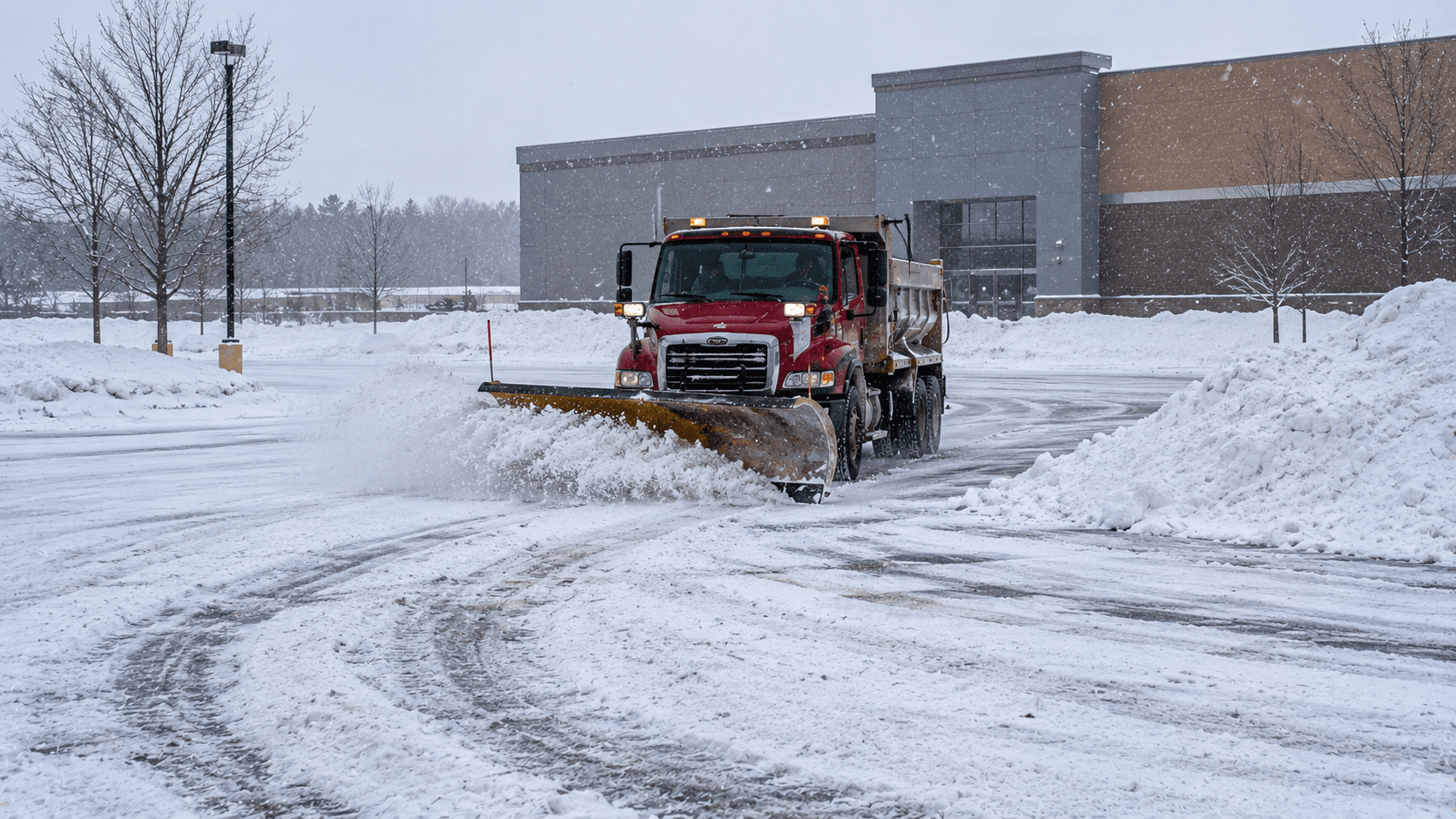
Heavy, repeated snow events mean more ploughing, and more ploughing means more physical stress on line striping, curb edges, and any existing cracks in the surface. It also means more de-icing salt applied more often, which accelerates asphalt oxidation and binder breakdown over a full winter season.
- More plow passes wear down striping faster. Properties in heavy lake-effect zones often need re-striping on a shorter cycle than a property in a lighter-snow region.
- Salt use increases with storm frequency. More lake-effect events mean more applications, which is harder on the pavement binder over a season than fewer, heavier storms.
- Plow blades catch on existing damage. Cracks and potholes that would otherwise wait until spring can be made worse by a plow blade catching an edge repeatedly through the season.
How to Prepare a Lake-Effect Property for Winter
Fall preparation matters more in a lake-effect zone than in a typical winter climate, simply because the season brings more total snow events to plow through.
- Fill cracks before the first snow, since a crack that catches a plow blade repeatedly through a heavy season gets worse fast.
- Re-stripe on a tighter cycle if you're in a heavy band, since more plowing wears lines down faster than in lighter-snow areas.
- Budget for more frequent spring inspection, since more total storms mean more opportunity for freeze-thaw damage to accumulate.
Our guide to freeze-thaw damage in the Northeast covers the general freeze-thaw mechanics that apply here too, though lake-effect zones add the extra factor of storm frequency, not just cold temperature. We serve commercial properties throughout the region, including Illinois and Wisconsin.
FAQs
What causes lake-effect snow?
Lake-effect snow forms when cold air moves across the warmer surface of a Great Lake, absorbing moisture that falls as heavy, localized snow once it reaches land, often in narrow bands producing 2 to 3 inches per hour.
Does lake-effect snow affect the whole Great Lakes region equally?
No. It concentrates on the downwind, typically eastern and southeastern, shores of the lakes. Areas on the western and northern shores, including parts of northern Illinois, generally see less lake-effect snow than downwind areas in Wisconsin and Michigan.
How does lake-effect snow affect commercial parking lots differently than regular snow?
More frequent snow events mean more plowing and more de-icing salt applications over a season, which accelerates wear on striping and speeds up asphalt oxidation compared to a region with fewer, larger storms.
Should lake-effect properties seal coat or re-stripe more often?
Often, yes, if the property sits in a heavy lake-effect band. More plow passes wear down markings faster, so a shorter re-striping cycle and closer attention to seal coating timing can be worth budgeting for compared to a lighter-snow property.
Free Site Assessment