
Getting Your Connecticut Parking Lot Into Next Year's Budget
Quick Answer
Most Connecticut commercial property budgets for next year get finalized between September and December, but pavement damage from winter freeze-thaw doesn't fully show up until March or April, well after that budget has already closed.
Here's a timing problem almost nobody flags until it's too late. Your parking lot's real condition reveals itself in spring, right after freeze-thaw season. Your budget for next year gets locked in the fall, months before that damage shows up. If nobody documents the lot's condition now, there's no line item for it next year.
I am Gabriel, founder of FineLines. We work with Connecticut property managers and boards on this exact timing gap every fall, so here's how to get ahead of it.
Why the Two Calendars Don't Line Up
Most boards, property management companies, and facility teams build next year's operating and capital budget between September and December. Pavement, meanwhile, shows its true condition in March and April, after a full winter of freeze-thaw cycling has done its work. That timing gap matters because of what the Federal Highway Administration has documented about pavement economics: every dollar spent on preservation while a lot is still in good condition saves several dollars in later reconstruction costs. By the time spring damage is fully visible, next year's budget is already approved, and a parking lot repair nobody flagged in the fall often waits an entire additional year, getting more expensive the whole time.
What to Do Before Your Budget Closes
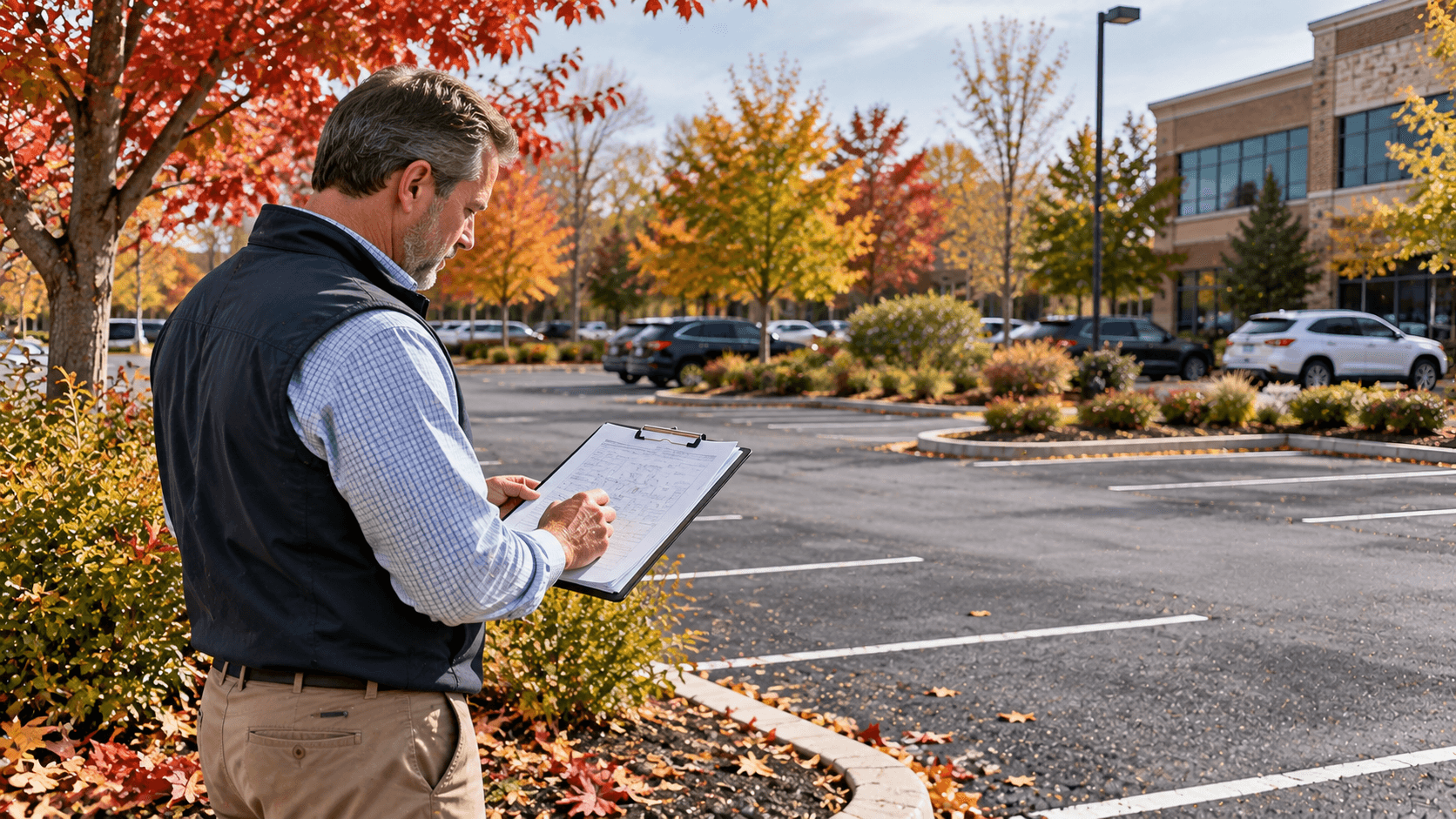
- Get a site assessment now, while the lot is still fully accessible. A fall assessment documents current condition before winter adds to it, giving you a real baseline instead of a guess.
- Photograph problem areas with dates. A dated set of fall photos makes a far stronger case for a budget line item than a verbal description, and it gives you a real before comparison once spring damage appears.
- Get pricing in hand before the budget vote, not after. A specific number is easier to approve than an open-ended request.
- Flag known trouble spots explicitly, standing water, existing cracks, faded ADA markings, rather than assuming the board already knows about them.

The Cost of Missing the Window
A parking lot repair that misses this year's budget cycle doesn't just wait, it gets worse while it waits. A crack that could have been filled for a modest cost in October can become a base failure requiring a far more expensive fix by the time it's finally budgeted a year later.
Our commercial parking lot maintenance schedule covers the full annual rhythm this fits into. If you manage a property in Connecticut, we can complete a fall assessment now, while there's still time to get real numbers in front of your board before the budget closes.
FAQs
When do Connecticut commercial property budgets typically get finalized?
Most boards, management companies, and facility teams finalize next year's operating and capital budget between September and December, well before winter freeze-thaw damage becomes fully visible in spring.
Why does parking lot damage show up after the budget is already set?
Pavement damage from freeze-thaw cycling accumulates through winter and becomes fully visible in March or April, months after most Connecticut property budgets have already closed for the following year.
What should I document before my property's budget meeting?
A dated site assessment and photographs of current problem areas, standing water, existing cracks, faded markings, give a board a concrete basis for approving a maintenance line item rather than an open-ended request.
Does waiting a year to fix a parking lot issue cost more?
Often, yes. A crack or minor drainage issue that's inexpensive to address in the fall can progress into a more serious, more expensive problem by the time it's addressed a full budget cycle later.
Free Site Assessment