
Cold Milling vs. Full-Depth Reclamation: Which Does Your Lot Need?
Quick Answer
Milling removes only the top 1 to 4 inches of asphalt and leaves the base intact. Full-depth reclamation pulverizes the entire asphalt layer plus a portion of the base, rebuilding the foundation itself.
These two get lumped together constantly, and the confusion costs people money. One is surface prep. The other is a foundation rebuild. Picking the wrong one means paying for a repair that was never going to hold.
What Milling Actually Does
Cold milling, also called cold planing, uses a rotating drum to grind away the top layer of an existing asphalt surface, typically 1 to 4 inches deep, while leaving the base underneath completely undisturbed. It is prep work for a new surface layer, not a repair to what's underneath.
What Full-Depth Reclamation Actually Does
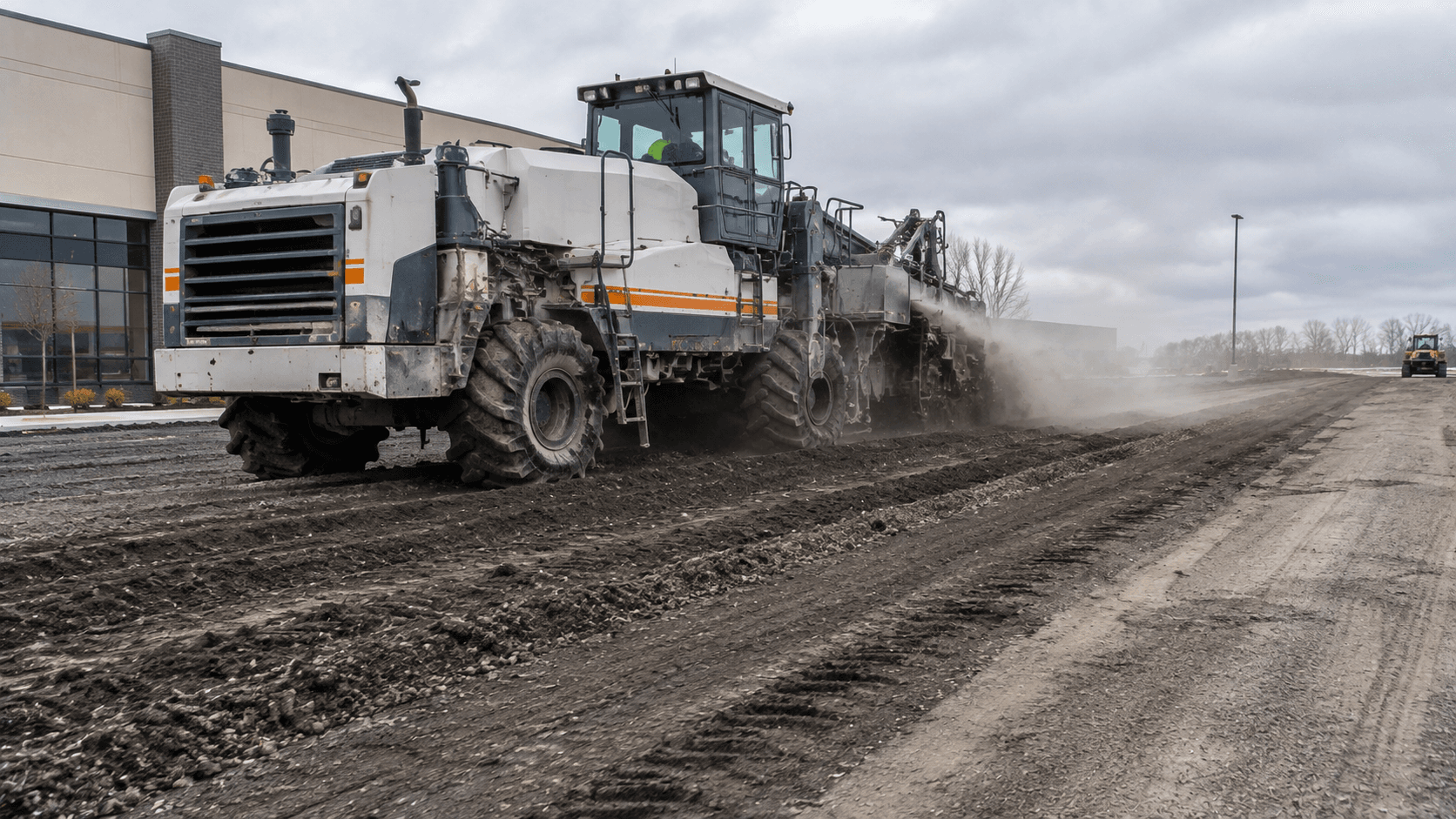
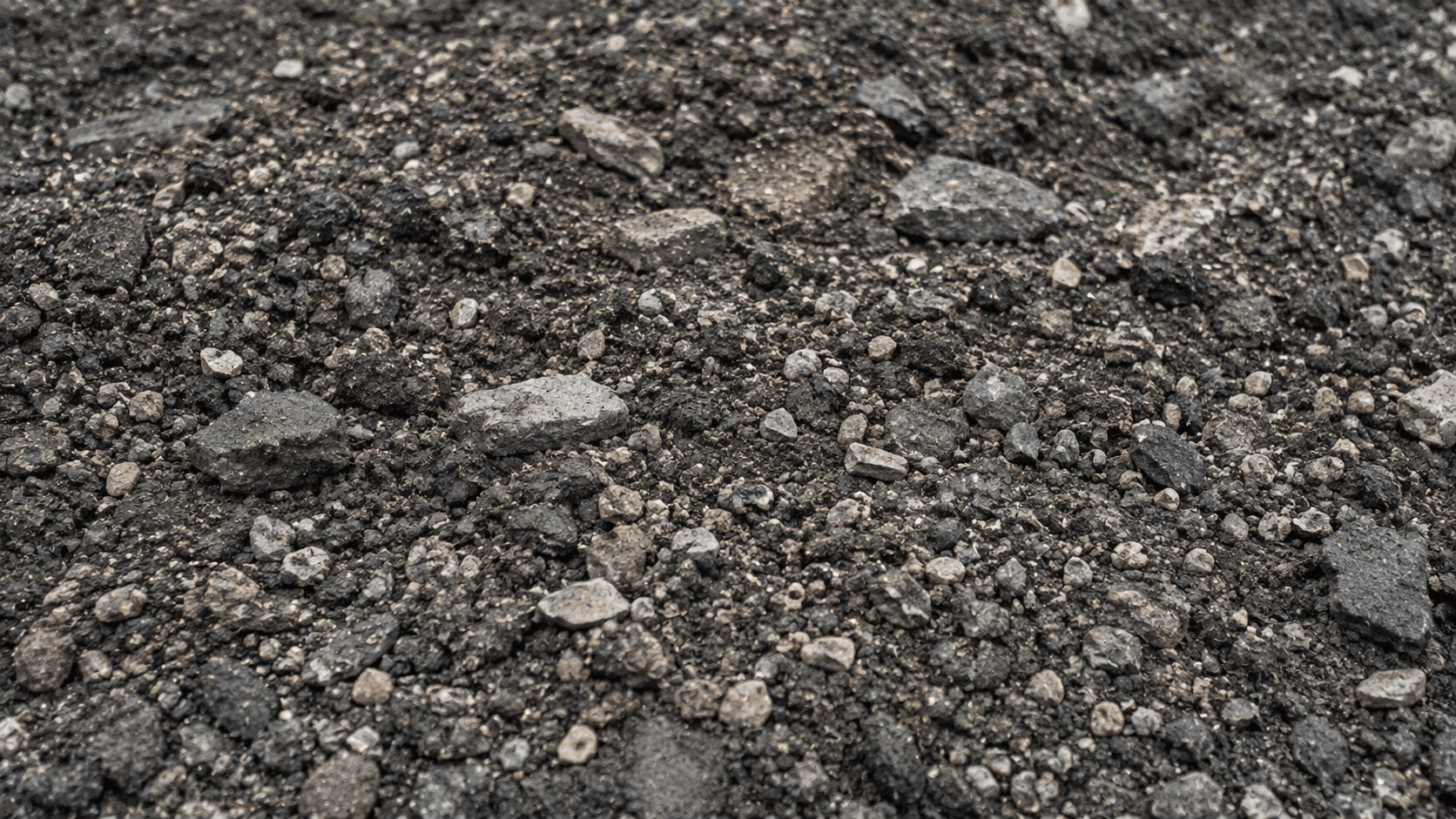
Full-depth reclamation (FDR) pulverizes the entire asphalt layer along with a portion of the base and sub-base below it, then blends that material into a new, stabilized foundation. According to the Asphalt Recycling and Reclaiming Association, FDR is treated as a distinct process from milling specifically because it addresses the foundation, not just the surface.
| Milling | Full-Depth Reclamation | |
|---|---|---|
| What it removes | Top 1–4 inches only | Full asphalt layer + portion of base |
| Base condition after | Untouched | Rebuilt as a new stabilized layer |
| Best for | Surface wear, sound base | Base failure, potholes, rutting |
| Relative cost | Lower | Higher upfront, often cheaper long-term |
| Typical use case | Prep before an overlay | Full lot rebuild without hauling away material |
How to Know Which Your Lot Needs
The deciding factor is the same one that decides overlay versus full replacement: whether the base has failed. If the base is still structurally sound and the problem is surface-level, wear, minor cracking, rough ride, milling followed by an overlay is the faster, less expensive path. If the base itself has failed, showing up as recurring potholes, rutting, or alligator cracking across a large area, milling will not fix it. That's when full-depth reclamation earns its higher upfront cost.
- Choose milling when: the base is sound and you're prepping for a new surface layer over otherwise healthy pavement.
- Choose full-depth reclamation when: the base has failed and a standard overlay would just be paving over the same problem.
Why Full-Depth Reclamation Can Actually Cost Less Over Time
Milling has the lower price tag upfront. But if the base has failed, milling and overlaying doesn't fix the underlying issue, it just delays it, and you end up paying for the overlay and the eventual reclamation. FDR also reuses the existing pavement material in place rather than hauling it away and trucking in new base material, which is part of why it's often more cost-effective than full removal and replacement for a lot with a genuinely failed base.
Our guide to what asphalt milling actually is covers the milling side of this in more depth, including cost ranges and the RAP recycling process.
FAQs
What is the main difference between milling and full-depth reclamation?
Milling removes only the top 1 to 4 inches of asphalt and leaves the base untouched. Full-depth reclamation pulverizes the entire asphalt layer plus a portion of the base, rebuilding the foundation as a new stabilized layer.
Is full-depth reclamation more expensive than milling?
Upfront, yes. But when the base has actually failed, milling and overlaying doesn't solve the problem and often ends up costing more over time than doing full-depth reclamation once and rebuilding the foundation properly.
Can full-depth reclamation fix potholes and rutting?
Yes, when those issues stem from base failure rather than surface wear. Since FDR rebuilds the foundation itself, it addresses the root cause of recurring potholes and rutting in a way that milling and resurfacing cannot.
How do I know if my parking lot's base has failed?
Signs include potholes that keep returning in the same spots after repair, rutting or wheel path depressions, and alligator cracking spread across a large area of the lot. A site assessment confirms base condition before recommending either method.
Free Site Assessment