
Asphalt Overlay vs. Full Replacement: Which Does Your Lot Need?
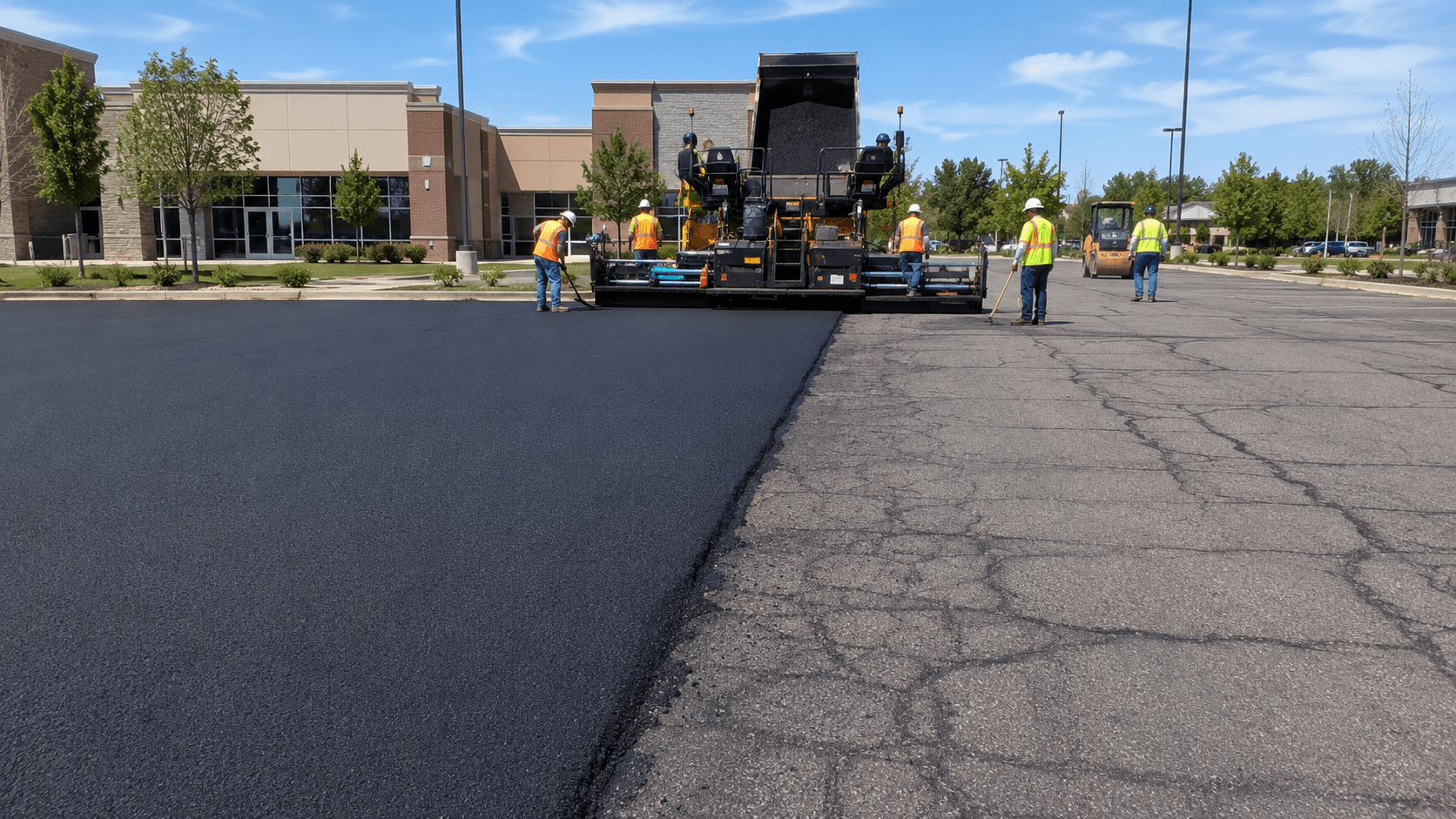
When a lot is falling apart, almost every property owner asks for the same thing: the cheaper fix. I get it, an overlay can cost half what a full replacement does.
But here's what I tell them on every site visit: the right answer isn't about which one's cheaper. It's about what's underneath your asphalt. Pick wrong and you'll pay for the same lot twice.
First, What's the Difference?
Quick definitions, because the terms get mixed up:
- Overlay (resurfacing): A new layer of asphalt laid right over your existing surface. As Pavement Interactive defines it, an overlay is different from a total replacement and is done when there's only minor to modest damage. Think of it as a fresh top layer.
- Full replacement (reconstruction): Tearing out the old asphalt, and often the base beneath it, down to the ground, then rebuilding from scratch.
One refreshes the surface. The other rebuilds the structure.
The One Thing That Decides It: Your Base
Forget the surface for a second. What matters is the base, the compacted stone foundation under your asphalt.
- If the base is solid, the damage is only skin-deep, and an overlay is usually the right, cost-effective call.
- If the base has failed, no surface fix will hold. The lot needs to be rebuilt from the ground up.
That's the whole decision in one sentence. Everything else is just reading the signs.
When an Overlay Is the Right Call
An overlay makes sense when your lot shows surface wear but the structure is still sound. Signs you're a good candidate:
- Surface cracking that's limited, not everywhere
- A faded, rough, or worn-out top layer
- A few isolated problem spots, not lot-wide failure
- Good drainage with no major standing water
- A base that's never been rebuilt and still feels solid
When it fits, an overlay is hard to beat:
- Costs about half of a full replacement
- Adds 10–15 years of life when done right
- Far less disruption, often done in a day or two
- Gets your lot back in use faster
When You Need a Full Replacement
Sometimes the honest answer is the more expensive one. Your lot likely needs full replacement when you see:
- Widespread alligator cracking (that interconnected, scaly pattern) across more than about 25% of the lot
- Potholes that keep coming back in the same spots after repairs
- Sinking or settling areas where the ground has dropped
- Standing water from a drainage problem the surface can't fix
- A lot that's already been overlaid before and is failing again
These all point to the same thing: the base is gone. Pour a new surface over it and the new surface fails too.
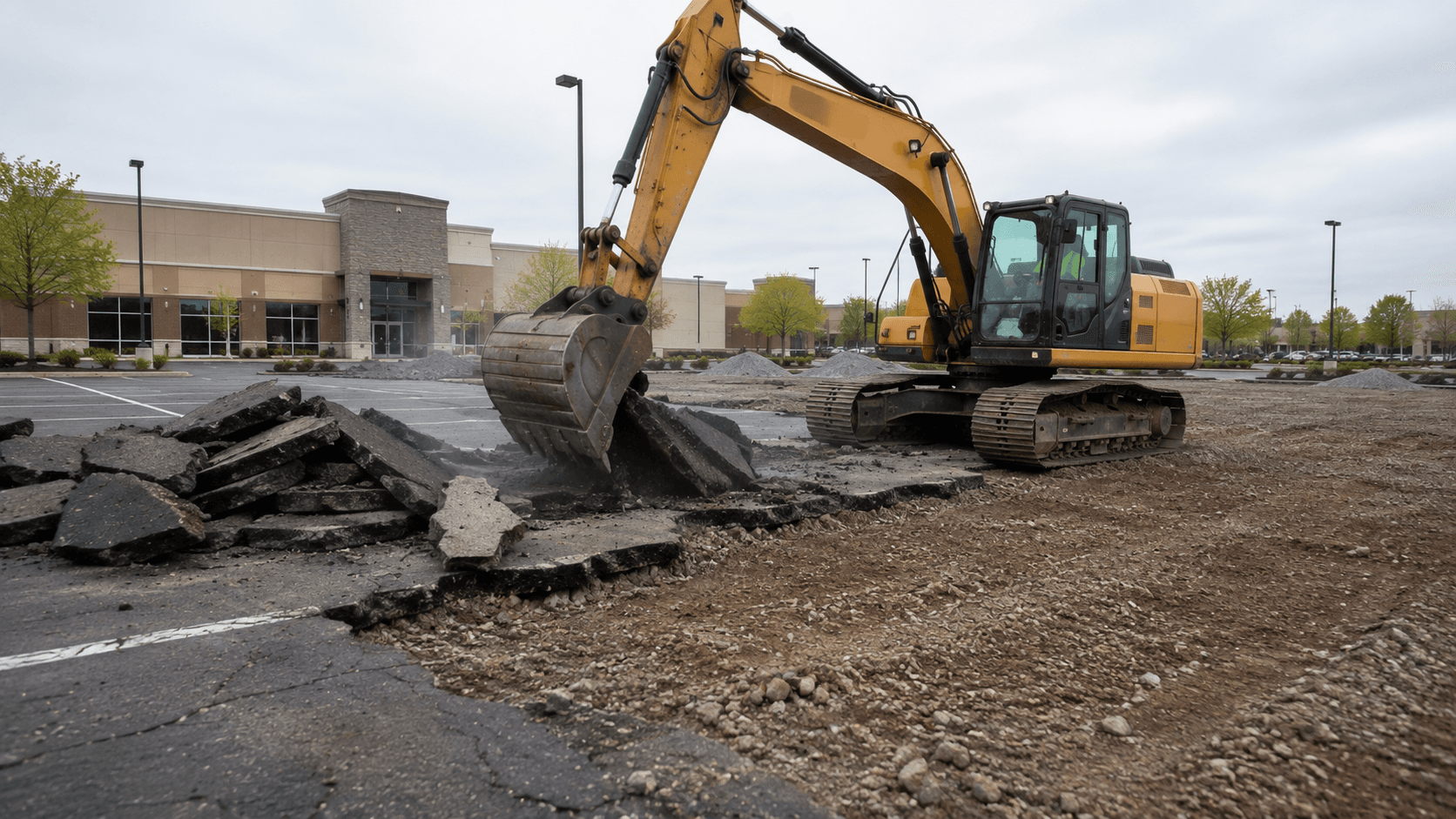
The Middle Option: Mill & Overlay
There's a smart in-between most owners don't know about. With a mill and overlay, we grind off the top inch or two of old asphalt first, then lay the new layer.
Why mill first? It:
- Gives the new asphalt a clean surface to bond to
- Keeps your grade and drainage exactly where they should be
- Avoids raising the lot height against curbs and doorways
It costs a bit more than a plain overlay but still far less than full replacement, and it lasts longer than an overlay alone. When the base is sound but the surface is rough, this is often the sweet spot.
The Costly Mistake: Overlaying a Failed Base
Here's the trap I see all the time. A contractor quotes a cheap overlay on a lot that really needs rebuilding. The owner takes the lower price, understandably.
Two problems show up fast:
- Reflective cracking. The cracks in the old surface telegraph straight up through the new asphalt within a year or two.
- The base keeps failing. The overlay can't carry what the base couldn't, so it breaks down right alongside it.
Now you've paid for an overlay and still need the replacement you needed in the first place. A real assessment up front prevents this every time.
Cost & Lifespan: The Trade-off
Here's the honest comparison:
| Overlay | Full Replacement | |
|---|---|---|
| What it is | New asphalt over the existing surface | Remove and rebuild from the base up |
| Best when | Base is sound, surface damage only | Base has failed |
| Cost per sq. ft | ~$2–$5 | ~$3–$8+ |
| Disruption | Lower, faster | Higher, longer |
The math isn't “cheaper wins.” It's this: on a sound base, an overlay is the smart buy. On a failed base, replacement is actually cheaper over time, because the overlay would just fail and need redoing.
When we handle overlays and resurfacing, we assess the base first and tell you straight which one your lot actually needs, even when it's not the answer you were hoping for.
FAQs
How do I know if I need an overlay or a full replacement?
It comes down to your base. If the base is structurally sound and the damage is at the surface, worn texture, limited cracking, an overlay works. If you've got widespread alligator cracking, recurring potholes, or settling, the base has failed and the lot needs full replacement. A site assessment confirms which.
How long does an asphalt overlay last?
On a sound base with regular maintenance, a commercial overlay typically lasts 10–15 years. Seal coating every 2–3 years and filling cracks early keeps it toward the high end of that range.
Is an overlay cheaper than replacing the lot?
Yes, usually about 30–50% less, because the existing base stays in place. But it's only the cheaper choice if that base is still good. Over a failed base, an overlay fails too, and you end up paying for the replacement anyway.
Can you overlay a parking lot that has potholes or alligator cracking?
A few isolated potholes can be repaired before an overlay. But widespread potholes and alligator cracking mean the base has failed, and overlaying it won't hold. In that case, full-depth repair or replacement is the right fix. We assess the extent before recommending anything.
Free Site Assessment